
Soft Neutrals Bedroom: Design Ideas for a Cozy Retreat
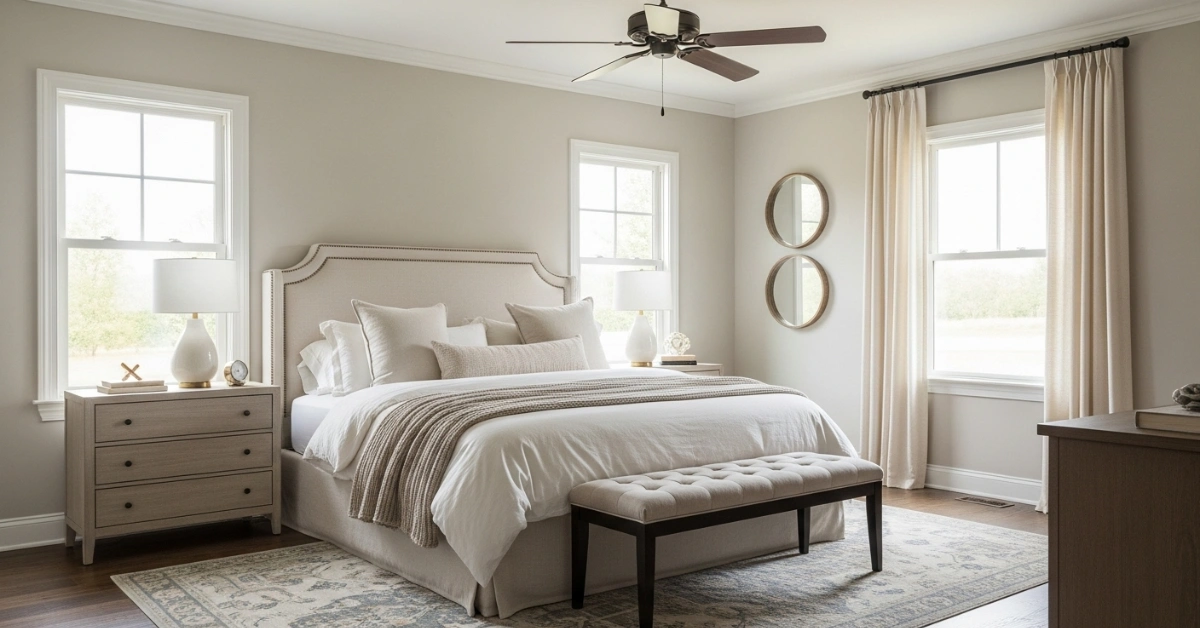
Struggling to create a bedroom that feels calm, inviting, and timeless? Many homeowners face the challenge of designing a space that balances comfort and style without feeling cold or overly trendy. A soft neutrals bedroom offers the perfect solution, transforming your space into a serene sanctuary that promotes relaxation and complements any design aesthetic. In this guide, we’ll explore practical tips, color palettes, furniture choices, and decor ideas to help you craft a cozy, elegant bedroom that stands the test of time.
Whether you’re refreshing a small guest room or overhauling your primary suite, this article provides actionable inspiration to bring your soft neutrals bedroom vision to life. From choosing the right hues to layering textures, let’s dive into creating a space that feels both luxurious and lived-in.
What Is a Soft Neutrals Bedroom?
A soft neutrals bedroom is a design approach that uses muted, neutral tones—think creams, beiges, taupes, soft grays, and warm whites—to create a calming and versatile space. Unlike stark whites or bold colors, soft neutrals strike a balance, offering warmth and sophistication without overwhelming the senses.
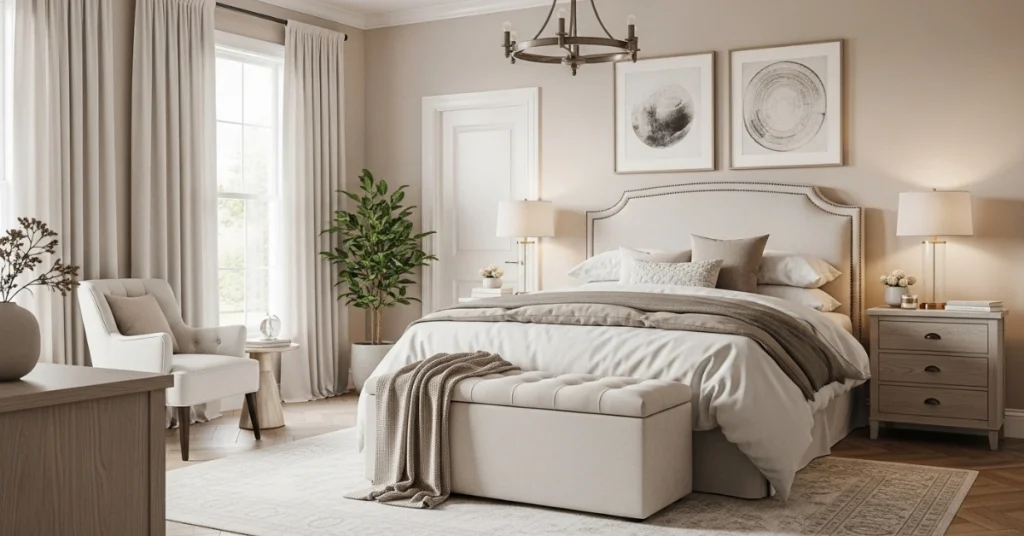
According to interior designer Sarah Thompson, “Soft neutrals act as a canvas, allowing homeowners to express their personality through textures and accents while keeping the room restful.” This style suits various aesthetics, from modern minimalism to rustic charm, making it a go-to for those seeking flexibility and timelessness.
Why Choose Soft Neutrals?
- Versatility: Neutral tones pair well with any accent color or decor style.
- Timelessness: Soft neutrals avoid fleeting trends, ensuring your bedroom stays relevant for years.
- Calm Atmosphere: Muted hues promote relaxation, ideal for a restful sleep environment.
- Easy to Update: Swap out accessories like pillows or throws to refresh the look without a major overhaul.
Choosing the Perfect Soft Neutrals Color Palette
The foundation of a soft neutrals bedroom lies in selecting the right color palette. Aim for hues that feel warm and inviting rather than cold or sterile. Here’s how to get started:
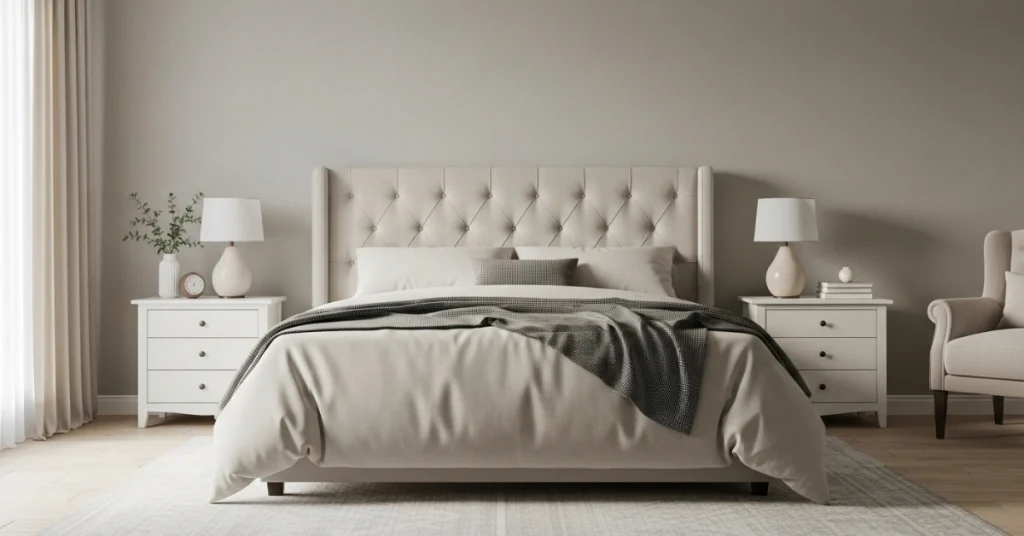
Popular Soft Neutral Tones
- Warm Whites: Shades like ivory or alabaster add brightness without harshness.
- Soft Grays: Greige (a gray-beige blend) or dove gray offers subtle sophistication.
- Beiges and Taupes: Warm beiges or sandy taupes create a cozy, grounded feel.
- Muted Pastels: Barely-there blush or sage can add a hint of color while staying neutral.
Tips for Selecting Your Palette
- Test Paint Samples: Colors look different under natural and artificial light. Paint small patches and observe them at various times of day.
- Consider Undertones: Warm undertones (yellow, peach) feel cozier, while cool undertones (blue, green) lean modern.
- Use a Monochromatic Approach: Stick to one neutral family (e.g., warm beiges) and vary shades for depth.
- Incorporate Accent Hues Sparingly: Add subtle pops of color, like dusty blue or sage green, for contrast.
For example, in my friend’s recent bedroom redesign, she chose a creamy beige wall color paired with soft gray bedding. The result was a warm, inviting space that felt spacious despite the room’s small size.
“When selecting neutrals, always consider the room’s lighting. North-facing rooms benefit from warmer tones to counter cooler light,” advises interior designer Emily Hart.
Furniture Choices for a Soft Neutrals Bedroom
Furniture sets the tone for functionality and style in a soft neutrals bedroom. Opt for pieces that blend comfort with elegance while complementing the neutral palette.
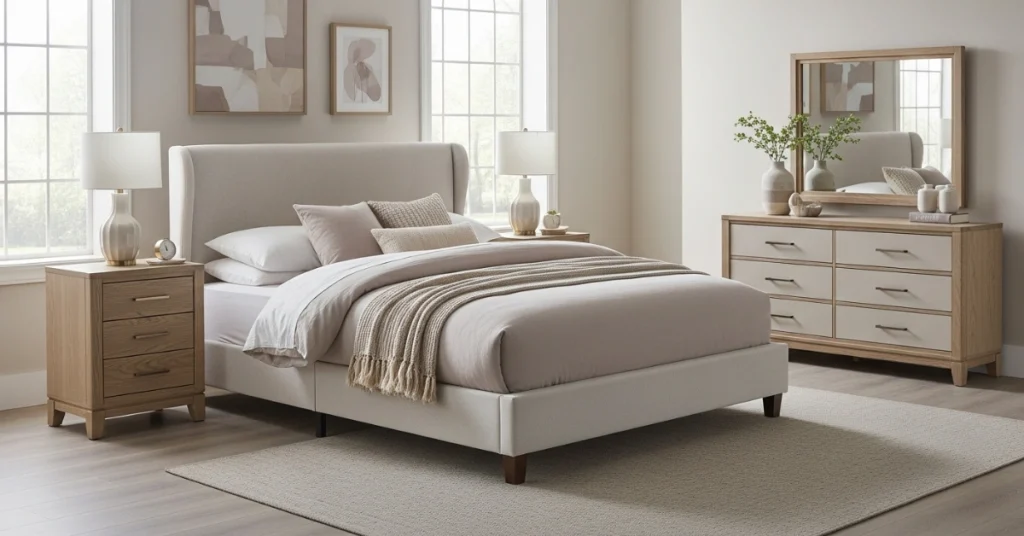
Key Furniture Pieces
- Bed Frame: Choose upholstered frames in linen or velvet for a soft, luxurious look. A wooden frame in oak or walnut adds natural warmth.
- Nightstands: Symmetrical nightstands in light wood or painted finishes keep the space cohesive.
- Dresser: A sleek, low-profile dresser in a neutral finish maximizes space without overpowering the room.
- Accent Chair: A cozy chair in a corner adds function and invites relaxation.
Material and Finish Ideas
- Wood: Light oak or ash complements neutral tones without clashing.
- Metal Accents: Brushed gold or matte black hardware adds subtle contrast.
- Upholstery: Opt for fabrics like linen, cotton, or wool in shades that match your palette.
Practical Example
In a recent project, a couple transformed their bedroom by pairing a cream upholstered bed with walnut nightstands. The contrast between soft fabric and warm wood created a balanced, inviting look that felt both modern and timeless.
Layering Textures for Depth and Comfort
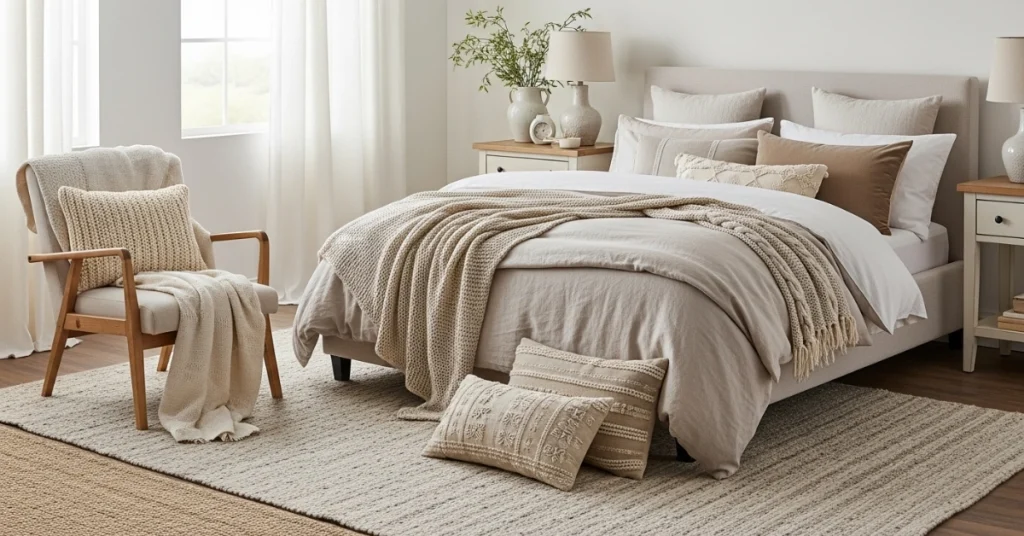
A soft neutrals bedroom risks feeling flat without texture. Layering different materials adds visual interest and coziness.
Texture Ideas to Incorporate
- Bedding: Mix linen sheets, a wool throw, and cotton shams for a tactile experience.
- Rugs: A plush area rug in a neutral shade grounds the space. Jute or sisal adds a natural touch.
- Curtains: Floor-length linen or cotton drapes in soft whites soften the room’s edges.
- Pillows and Throws: Combine knitted, velvet, and embroidered pillows for variety.
How to Layer Effectively
- Start with Large Pieces: Choose a rug and curtains as your base textures.
- Add Bedding Layers: Combine a quilt, duvet, and throw for depth.
- Mix Finishes: Pair smooth fabrics (like cotton) with rougher ones (like jute).
- Limit Patterns: Stick to subtle patterns like stripes or geometrics to avoid overwhelming the neutral palette.
“Texture is the secret weapon in a neutral bedroom. It adds warmth and personality without relying on bold colors,” says designer Laura Bennett.
Lighting for a Soft Neutrals Bedroom
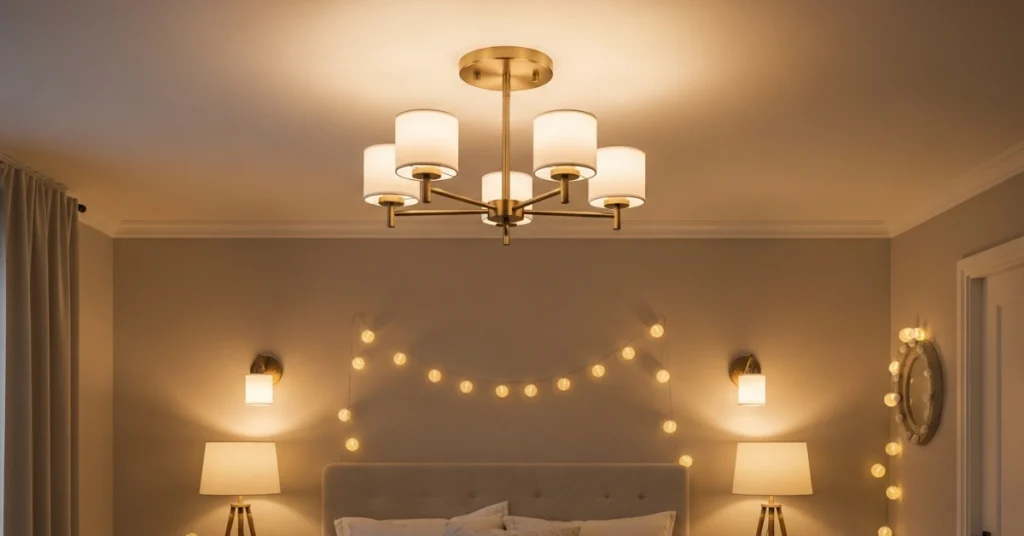
Lighting plays a crucial role in enhancing the ambiance of a soft neutrals bedroom. The right fixtures and placement create a warm, inviting glow.
Types of Lighting to Include
- Ambient Lighting: A chandelier or flush-mount ceiling light in brushed gold or matte white sets the mood.
- Task Lighting: Bedside lamps with linen shades provide focused light for reading.
- Accent Lighting: Wall sconces or string lights add a cozy, decorative touch.
Lighting Tips
- Use Dimmers: Adjustable lighting lets you control the mood from bright to soft.
- Choose Warm Bulbs: Opt for bulbs with a 2700K–3000K color temperature for a cozy glow.
- Layer Light Sources: Combine overhead, bedside, and accent lighting for versatility.
For instance, installing dimmable sconces on either side of the bed in a recent project allowed the homeowners to create a spa-like atmosphere at night.
Decor and Accessories to Elevate the Look
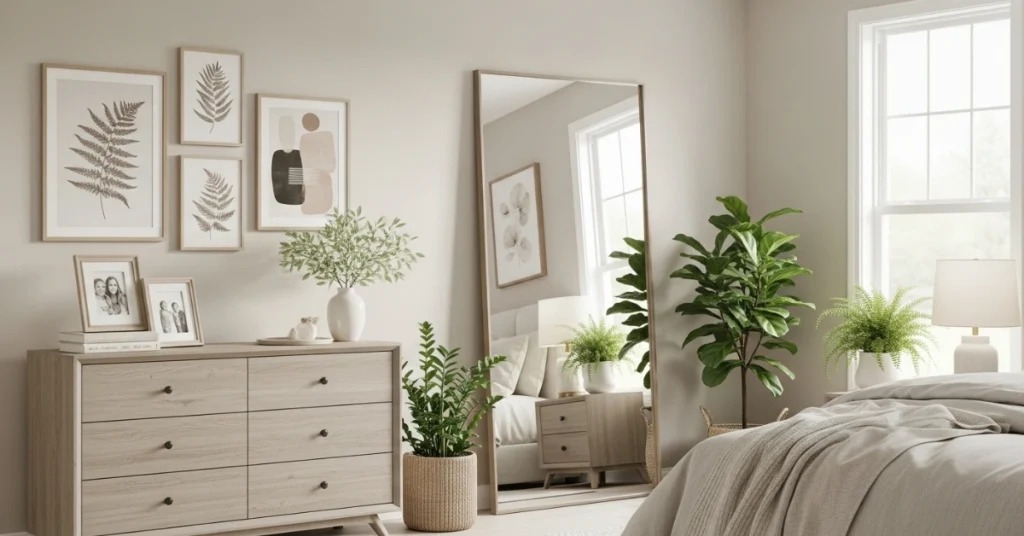
Accessories bring personality to a soft neutrals bedroom without disrupting its calm vibe. Focus on pieces that add warmth and character.
Must-Have Decor Elements
- Wall Art: Neutral-toned prints, abstract paintings, or framed botanicals add subtle interest.
- Mirrors: A large mirror with a slim frame reflects light and makes the room feel larger.
- Plants: Greenery like a fiddle-leaf fig or potted fern adds life and soft color.
- Personal Touches: Family photos or heirlooms in neutral frames tie the space to your story.
Decor Dos and Don’ts
| Do | Don’t |
|---|---|
| Use odd numbers for grouping (e.g., three vases). | Overcrowd surfaces with too many items. |
| Choose metallic accents sparingly for elegance. | Use overly bright or clashing colors. |
| Mix textures in decor (e.g., ceramic and wood). | Stick to one texture, which can feel flat. |
Incorporating Accent Colors
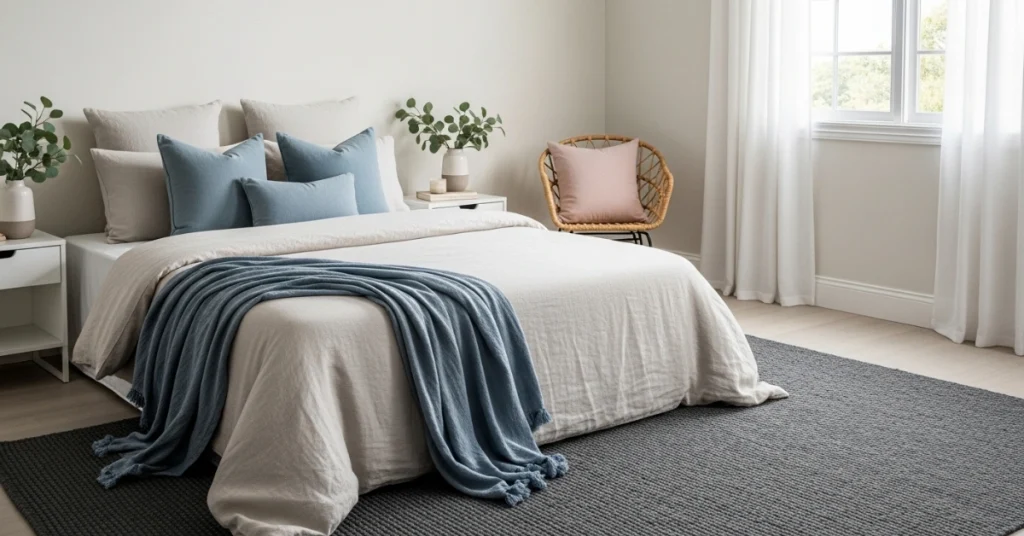
While a soft neutrals bedroom relies on muted tones, strategic accent colors can add depth without overwhelming the space.
Best Accent Colors for Soft Neutrals
- Dusty Blue: Adds a calming, coastal vibe.
- Sage Green: Brings an organic, earthy feel.
- Blush Pink: Offers a soft, romantic touch.
- Charcoal Gray: Provides bold contrast for a modern look.
How to Add Accents
- Through Textiles: Use throw pillows, blankets, or curtains in accent hues.
- In Small Decor: Vases, lamps, or artwork can introduce color subtly.
- With Furniture: An accent chair or ottoman in a muted hue adds flair.
For example, a client recently added dusty blue throw pillows to a beige bedroom, creating a serene yet dynamic look that felt fresh and inviting.
Common Mistakes to Avoid in a Soft Neutrals Bedroom
Even with the best intentions, it’s easy to make missteps when designing a soft neutrals bedroom. Here are pitfalls to watch out for:
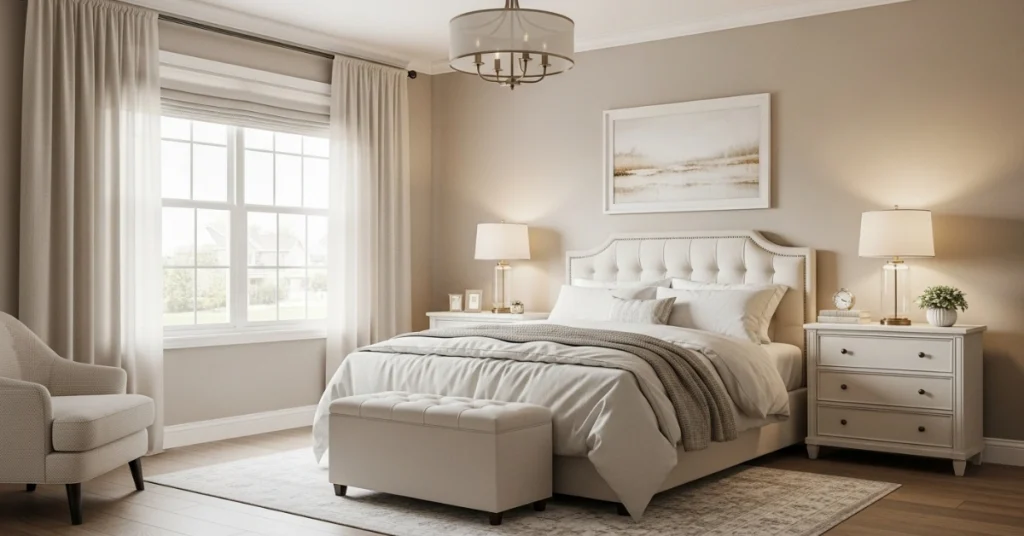
- Going Too Monochrome: Without texture or subtle color variations, the room can feel flat.
- Ignoring Lighting: Cold lighting can make neutrals feel sterile. Always opt for warm bulbs.
- Overloading with Decor: Too many accessories can disrupt the calm vibe.
- Choosing the Wrong Undertones: Mismatched undertones (e.g., cool gray with warm beige) can clash.
Designer Mark Evans notes, “The biggest mistake is not testing colors in the actual space. What looks warm in the store might feel cold in your bedroom’s lighting.”
Maintaining a Soft Neutrals Bedroom
To keep your soft neutrals bedroom looking fresh and inviting, regular upkeep is key.
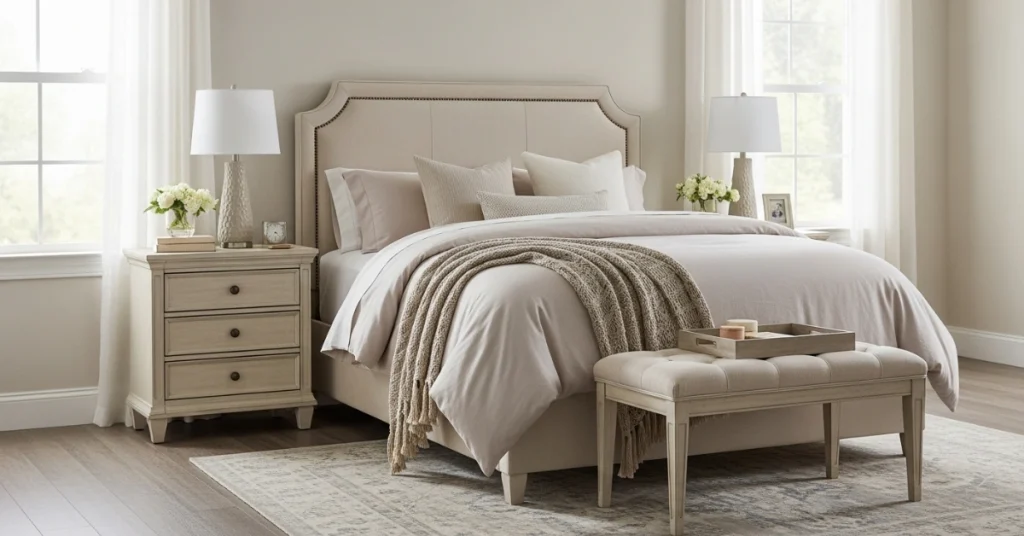
Maintenance Tips
- Clean Textiles Regularly: Wash bedding and vacuum rugs to prevent dust buildup.
- Refresh Paint: Touch up walls every few years to maintain a crisp look.
- Rotate Accessories: Swap pillows or throws seasonally for a fresh feel.
- Protect Surfaces: Use coasters or trays on nightstands to avoid stains.
Inspiration from Real Soft Neutrals Bedrooms
Looking for real-world examples? Here are two inspiring soft neutrals bedroom designs:
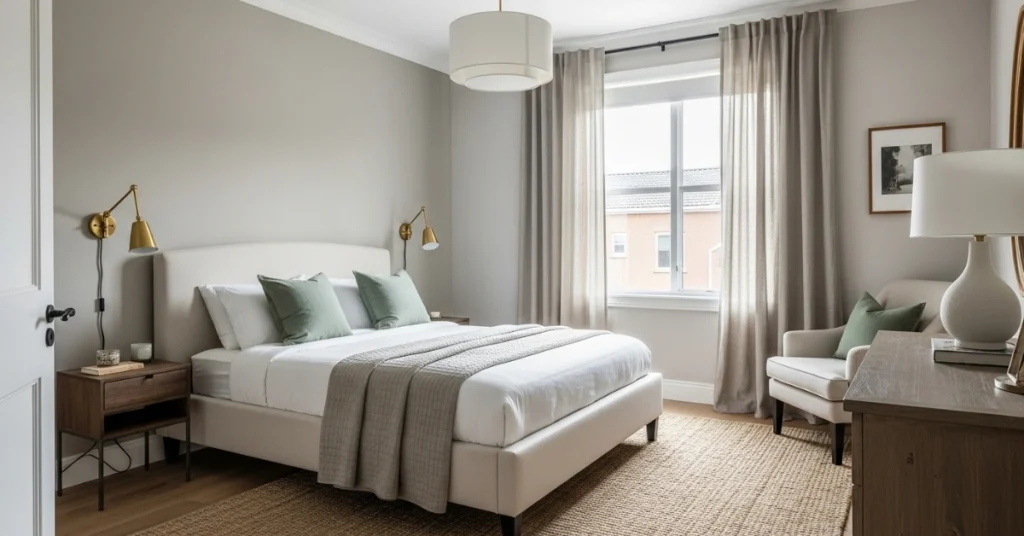
- Modern Minimalist: A small urban apartment used a cream upholstered bed, light gray walls, and linen curtains to create a spacious, airy feel. Gold-accented sconces added a touch of luxury.
- Rustic Retreat: A countryside home paired taupe walls with a reclaimed wood bed frame and jute rug. Sage green pillows added a subtle pop of color.
These examples show how versatile a soft neutrals bedroom can be, adapting to different styles and spaces.
Conclusion:
A soft neutrals bedroom is more than a design choice—it’s a lifestyle that prioritizes calm, comfort, and timeless beauty. By carefully selecting a neutral palette, layering textures, and adding thoughtful accents, you can create a space that feels both luxurious and personal. Whether you’re starting from scratch or refreshing an existing room, the tips in this guide will help you build a bedroom that’s as functional as it is beautiful.
Ready to transform your bedroom into a serene retreat? Start by choosing one or two soft neutral colors and experimenting with textures. Share your design journey in the comments or explore our curated collection of neutral bedding and decor to bring your vision to life!


