
Wabi Sabi Kitchen Ideas: Timeless Design Inspiration
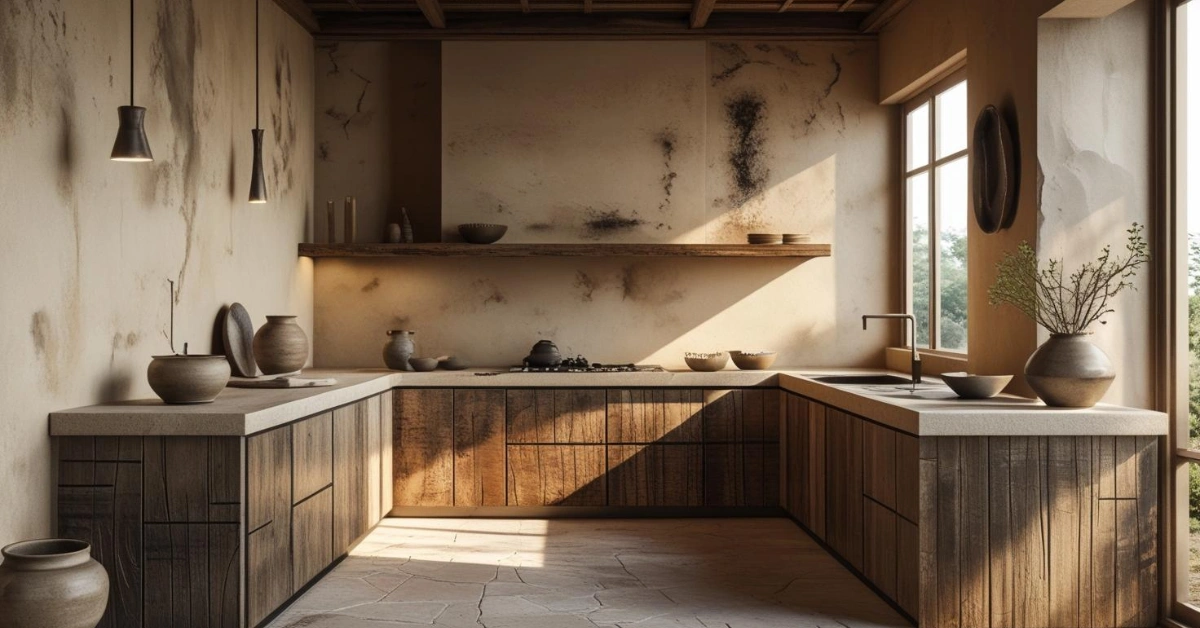
Your kitchen is the heart of your home, but does it feel cluttered, sterile, or disconnected from your personality? Many homeowners struggle to create a kitchen that feels both functional and soulful, often falling into the trap of overly polished, cookie-cutter designs that lack warmth.
Enter Wabi Sabi, a Japanese philosophy that celebrates imperfection, simplicity, and the beauty of natural materials. By embracing Wabi Sabi kitchen ideas, you can craft a space that feels authentic, calming, and deeply personal. This guide will walk you through practical tips, design inspiration, and expert insights to transform your kitchen into a timeless haven that reflects the beauty of imperfection.
What Is Wabi Sabi? Understanding the Philosophy
Wabi Sabi is rooted in Japanese aesthetics, emphasizing the beauty of the natural, the imperfect, and the transient. Unlike modern design trends that prioritize sleek perfection, Wabi Sabi celebrates weathered textures, organic shapes, and understated elegance. In a kitchen, this translates to spaces that feel lived-in, warm, and grounded in nature.
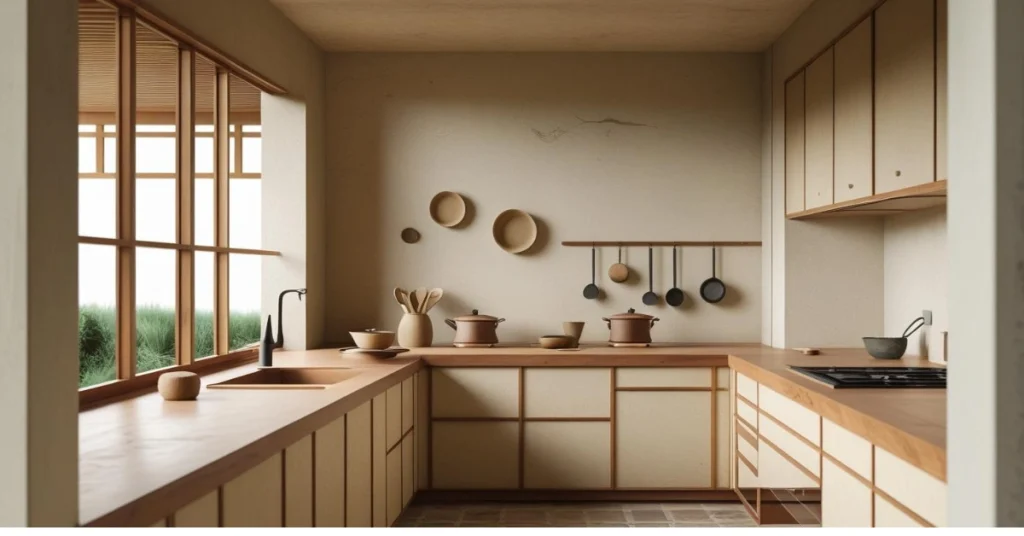
The Core Principles of Wabi Sabi
- Simplicity: Focus on minimalism and functionality without unnecessary embellishments.
- Imperfection: Embrace asymmetry, irregularities, and the charm of aged materials.
- Natural Beauty: Use earthy materials like wood, stone, and clay to create warmth.
- Transience: Highlight the beauty of fleeting moments, like the patina of a well-used cutting board.
According to interior designer Mia Tanaka, “Wabi Sabi is about creating a kitchen that tells a story—your story—through textures, materials, and objects that age gracefully.” By applying these principles, your kitchen becomes a sanctuary of authenticity and calm.
Why Choose Wabi Sabi for Your Kitchen?
A Wabi Sabi kitchen stands out because it prioritizes soul over showiness. It’s a design approach that resonates with those who value sustainability, mindfulness, and individuality. Here’s why Wabi Sabi kitchen ideas are perfect for modern homeowners:
- Timeless Appeal: Unlike trendy designs that date quickly, Wabi Sabi kitchens remain relevant for years.
- Eco-Friendly Focus: Natural, reclaimed, and sustainable materials align with green living.
- Emotional Connection: The imperfections and textures create a space that feels personal and inviting.
- Low Maintenance: Wabi Sabi embraces wear and tear, reducing the need for constant upkeep.
In my own home, I transformed a sterile, white kitchen into a Wabi Sabi-inspired space by adding a reclaimed wooden table and hand-thrown ceramic dishes. The result? A kitchen that feels like a warm hug every time I walk in.
Key Elements of Wabi Sabi Kitchen Ideas
To bring Wabi Sabi into your kitchen, focus on materials, colors, and textures that evoke simplicity and nature. Below are the essential elements to incorporate, along with practical tips for implementation.
1. Natural Materials for Authenticity
Wabi Sabi kitchens thrive on raw, organic materials that age beautifully. Think wood, stone, clay, and linen—materials that develop character over time.
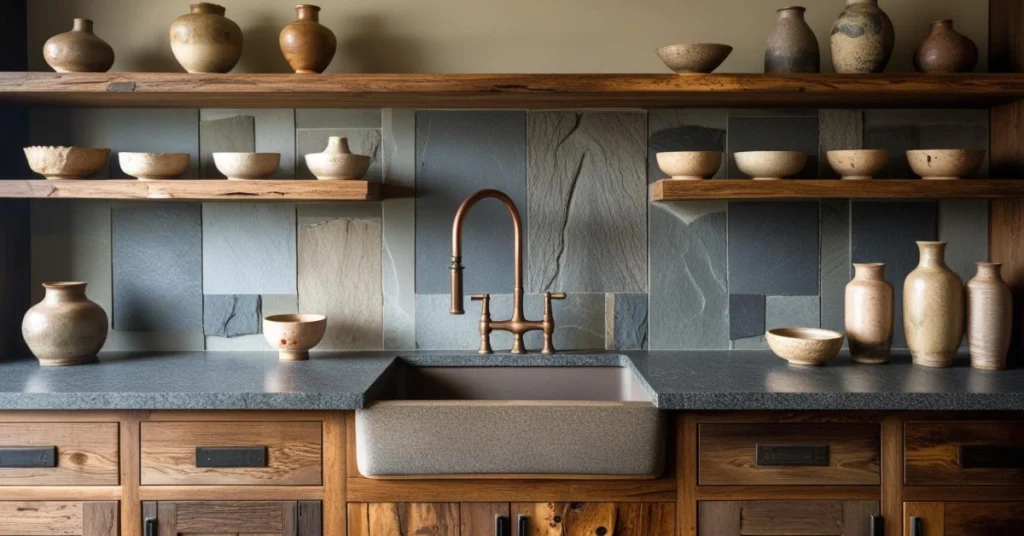
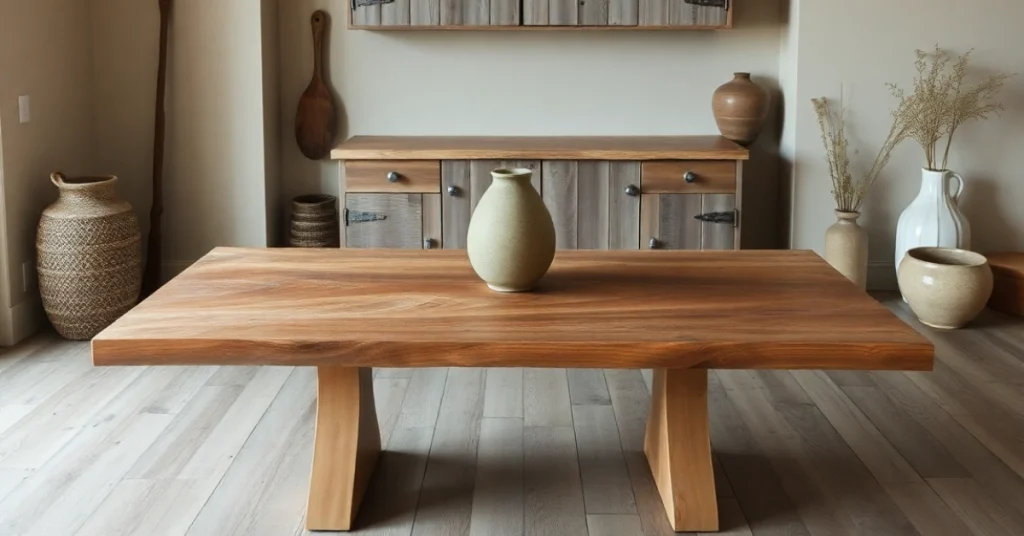
- Wood: Opt for reclaimed or unfinished wood for cabinets, countertops, or open shelving. A weathered oak island adds rustic charm.
- Stone: Use natural stone like granite or slate for countertops or backsplashes. Avoid polished finishes; opt for honed or textured surfaces.
- Clay and Ceramics: Incorporate handmade pottery for dishes, vases, or even lighting fixtures. The slight imperfections in hand-thrown ceramics embody Wabi Sabi.
- Metal: Choose aged metals like brass or copper for fixtures. A patinated copper faucet can become a focal point.
Tip: Visit local salvage yards or artisans to source reclaimed wood or handmade ceramics. These unique pieces add authenticity to your Wabi Sabi kitchen ideas.
2. Earthy Color Palettes
Wabi Sabi kitchens favor muted, earthy tones that reflect the natural world. Think soft grays, warm beiges, mossy greens, and creamy whites.
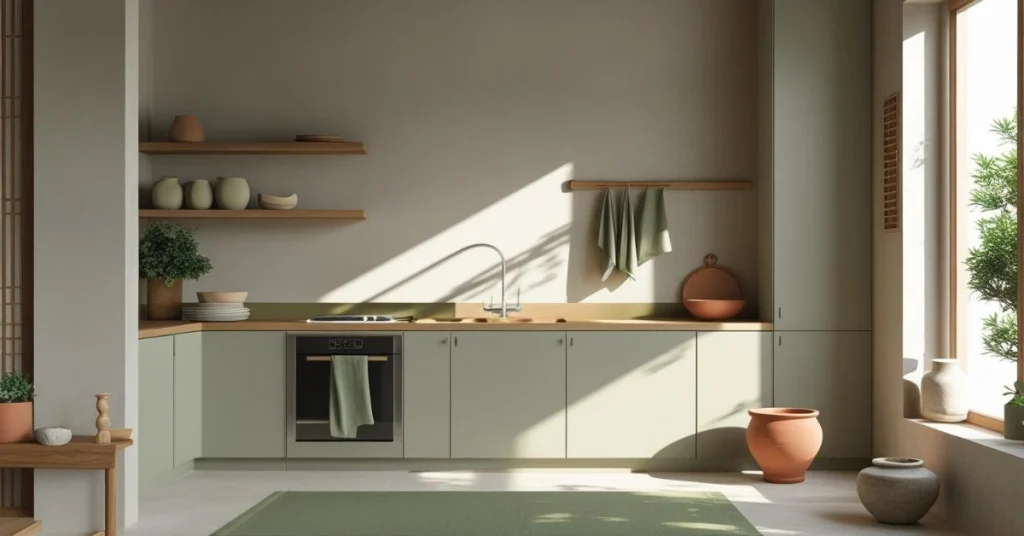
- Walls: Paint walls in soft, neutral tones like taupe or off-white to create a calming backdrop.
- Accents: Introduce subtle pops of color through textiles, like linen napkins in sage green or terracotta.
- Avoid: Bright, synthetic colors or stark whites that feel clinical.
Designer Hiroshi Kato suggests, “Choose colors that feel like they’ve been softened by time, like the faded hues of a weathered barn.” Test paint samples in natural light to ensure they complement your space.
3. Textured Surfaces for Depth
Texture is the soul of Wabi Sabi. Rough, tactile surfaces create visual interest and invite touch.
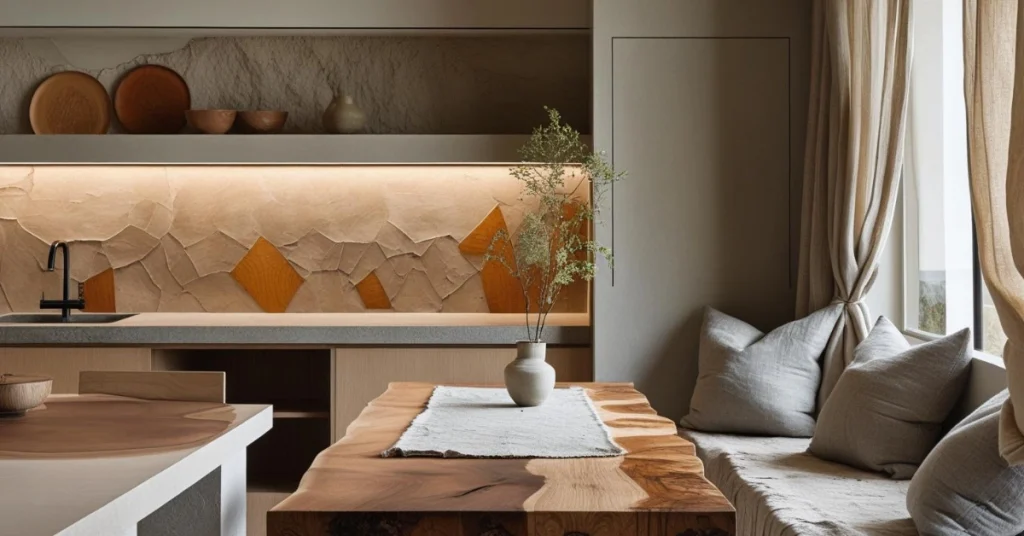
- Backsplashes: Install handmade tiles with irregular edges or a textured finish.
- Countertops: Choose butcher block or soapstone, which develop a patina over time.
- Textiles: Use linen or cotton curtains, table runners, or chair cushions with a slightly worn look.
Real-World Example: In a recent project, a homeowner replaced glossy subway tiles with zellige tiles—handcrafted Moroccan tiles with subtle variations. The result was a backsplash that felt alive and full of character.
4. Minimalist and Functional Layouts
Wabi Sabi kitchens prioritize function over excess. Keep the layout simple and clutter-free to create a sense of calm.
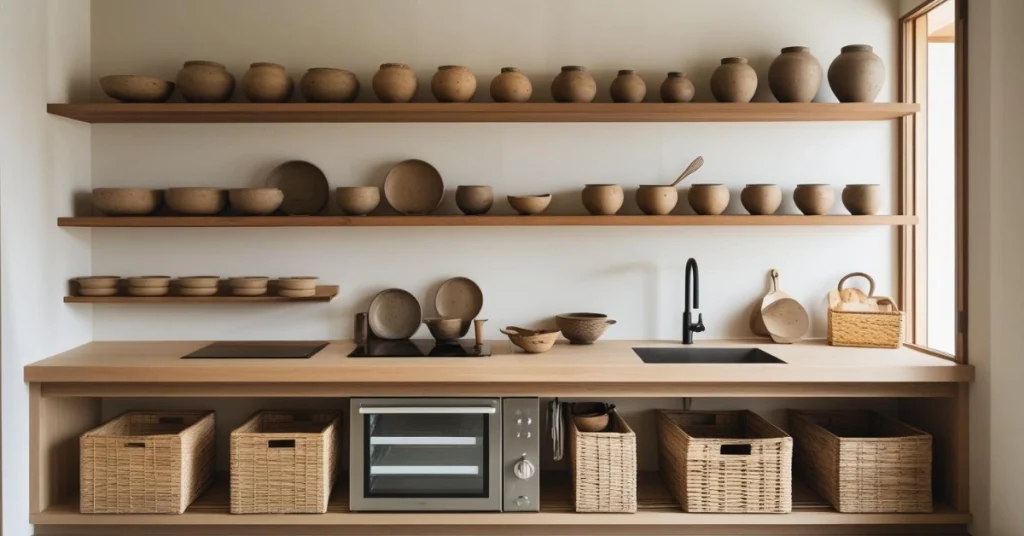
- Open Shelving: Replace upper cabinets with open shelves to display ceramics or wooden bowls.
- Streamlined Appliances: Choose appliances with simple designs and avoid overly high-tech gadgets.
- Functional Storage: Use woven baskets or wooden crates for storage to maintain a natural aesthetic.
Tip: Declutter your kitchen by keeping only essentials on display. Store rarely used items out of sight to maintain a serene atmosphere.
Wabi Sabi Kitchen Ideas: Design Inspiration
Ready to bring Wabi Sabi into your kitchen? Here are five detailed design ideas, each with practical steps to achieve the look.
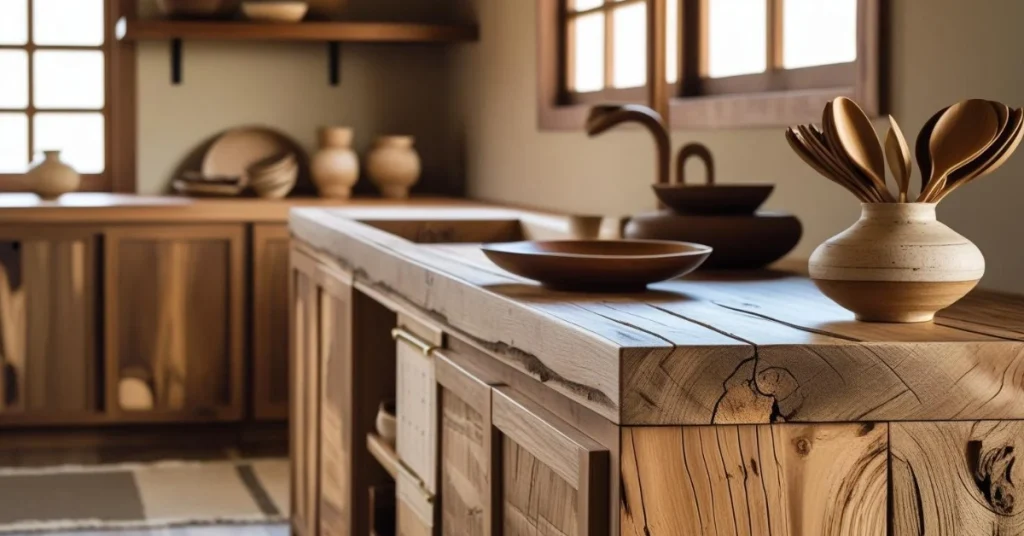
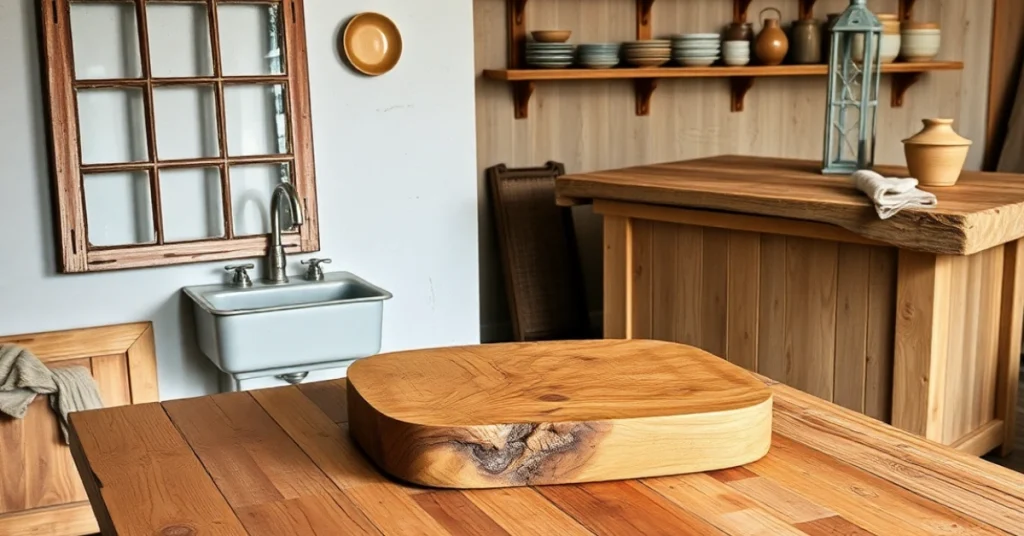
1. Rustic Wooden Island as a Focal Point
A reclaimed wood island anchors a Wabi Sabi kitchen with warmth and character.
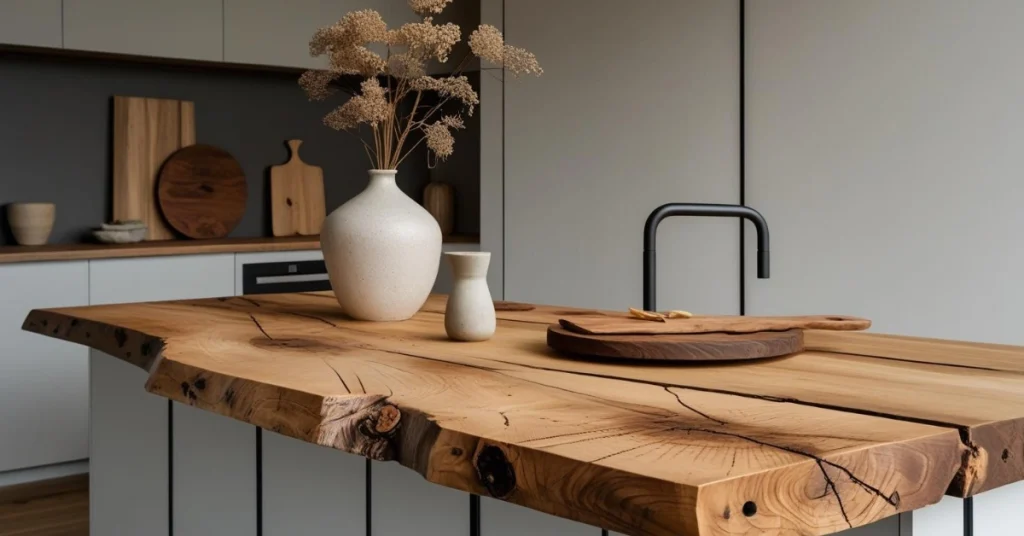
- How to Achieve It:
- Source a reclaimed wood slab from a local lumberyard or salvage shop.
- Pair it with simple, matte black or brass hardware for contrast.
- Keep the island uncluttered, displaying only a few handcrafted items, like a ceramic vase or wooden cutting board.
- Why It Works: The imperfections in the wood tell a story, making the island a conversation piece.
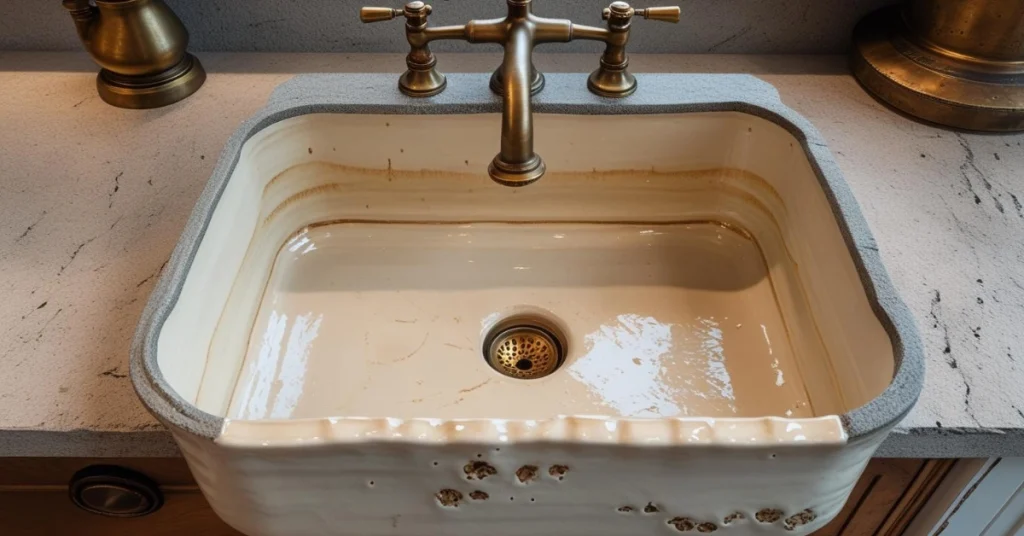
2. Handmade Ceramic Sink
A ceramic farmhouse sink with subtle imperfections adds soul to the kitchen.
- How to Achieve It:
- Choose a sink with a slightly uneven glaze or visible hand-thrown marks.
- Pair it with a vintage-inspired faucet in aged brass or copper.
- Complement the sink with a textured stone countertop.
- Why It Works: The sink becomes a functional piece of art, embodying Wabi Sabi’s love for craftsmanship.
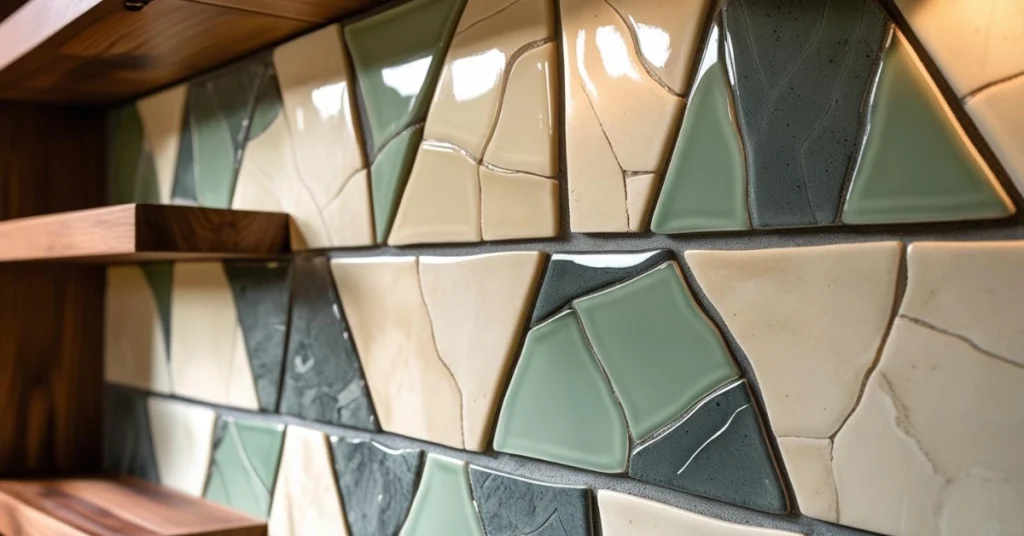
3. Textured Backsplash with Zellige Tiles
Zellige tiles, with their irregular shapes and glossy finish, create a stunning Wabi Sabi backsplash.
- How to Achieve It:
- Select tiles in earthy tones like cream, gray, or soft green.
- Install them with slightly uneven grout lines for an organic look.
- Pair with open wooden shelves to balance the texture.
- Why It Works: The tiles’ imperfections add depth and movement to the kitchen.
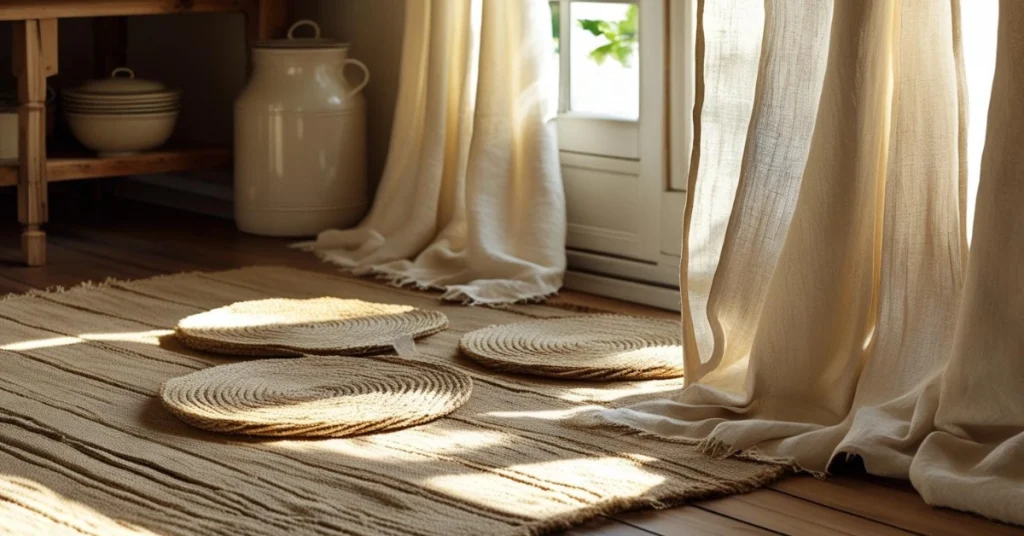
4. Woven and Linen Accents
Textiles like linen curtains or woven rugs soften the space and add tactile warmth.
- How to Achieve It:
- Hang linen curtains in a neutral tone to filter natural light.
- Use woven placemats or a jute rug to add texture underfoot.
- Choose textiles with frayed edges or a slightly worn look.
- Why It Works: Textiles bring softness and warmth, making the kitchen feel inviting.
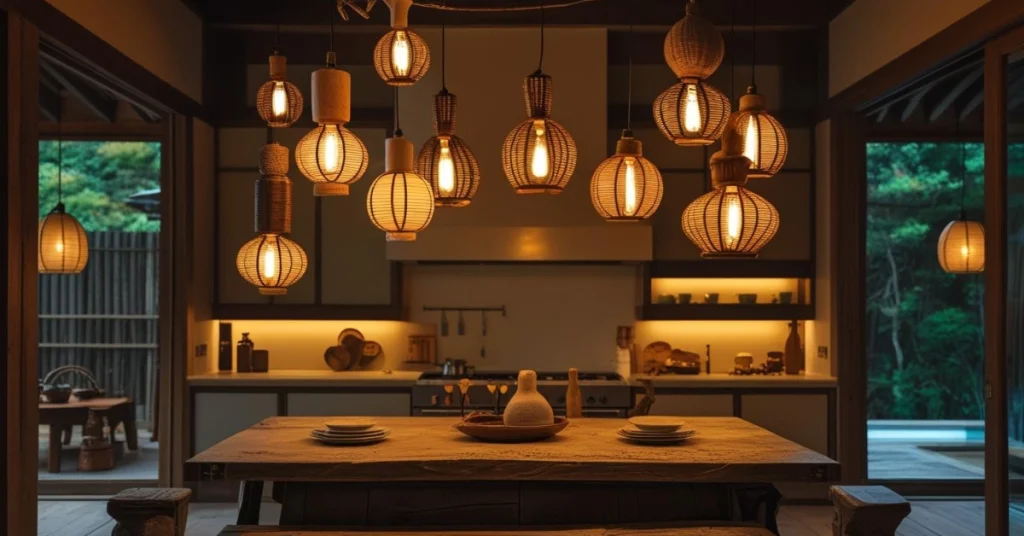
5. Vintage-Inspired Lighting
Lighting sets the mood in a Wabi Sabi kitchen. Opt for fixtures that feel handcrafted or aged.
- How to Achieve It:
- Install pendant lights made of ceramic, rattan, or aged metal.
- Use exposed Edison bulbs for a warm, nostalgic glow.
- Position lighting to highlight key areas, like the island or dining table.
- Why It Works: Soft, warm lighting enhances the cozy, lived-in feel of the space.
Practical Tips for Implementing Wabi Sabi Kitchen Ideas
Transforming your kitchen into a Wabi Sabi-inspired space doesn’t require a complete overhaul. Here are actionable tips to get started:
- Start Small with Accessories:
- Swap out mass-produced dishware for handcrafted ceramics.
- Add a wooden cutting board with visible grain or knots.
- Introduce a linen table runner or napkins in earthy tones.
- Incorporate Reclaimed Materials:
- Visit salvage yards for reclaimed wood or vintage fixtures.
- Repurpose old furniture, like a weathered dining table, for the kitchen.
- Embrace Patina and Wear:
- Don’t shy away from surfaces that show signs of use, like scratched wood or tarnished metal.
- Allow materials to age naturally rather than constantly refinishing them.
- Declutter Mindfully:
- Keep only items that serve a purpose or bring joy.
- Store excess gadgets and appliances to maintain a clean, open space.
- Work with Local Artisans:
- Commission a potter to create custom dishware or a carpenter to build a reclaimed wood shelf.
- Supporting local craftspeople adds authenticity to your design.
Table: Wabi Sabi Kitchen Materials and Sources
| Material | Characteristics | Where to Source |
|---|---|---|
| Reclaimed Wood | Weathered, unique grain | Salvage yards, lumberyards |
| Handmade Ceramics | Imperfect, hand-thrown | Local artisans, Etsy |
| Zellige Tiles | Irregular, glossy finish | Specialty tile stores, online |
| Aged Metal | Patinated, rustic | Vintage shops, hardware stores |
| Linen Textiles | Soft, slightly frayed | Home goods stores, local weavers |
Common Mistakes to Avoid in a Wabi Sabi Kitchen
While Wabi Sabi is forgiving, certain missteps can disrupt the aesthetic. Here’s what to avoid:
- Overloading with Decor: Too many items can make the space feel cluttered, not serene. Stick to a few meaningful pieces.
- Using Synthetic Materials: Plastic or glossy finishes clash with Wabi Sabi’s natural ethos. Opt for organic materials instead.
- Chasing Perfection: Avoid overly polished or symmetrical designs. Embrace asymmetry and imperfections.
- Ignoring Functionality: A Wabi Sabi kitchen should be practical. Ensure your layout supports daily cooking and living.
Designer Aiko Yamada warns, “The biggest mistake is trying to make a Wabi Sabi kitchen look ‘perfect.’ Let the materials and space breathe naturally.”
How to Maintain a Wabi Sabi Kitchen Over Time
A Wabi Sabi kitchen is designed to evolve. Here’s how to care for it while preserving its charm:
- Embrace Wear: Don’t rush to refinish scratched wood or faded textiles. These imperfections add character.
- Clean Mindfully: Use gentle, natural cleaners to avoid damaging raw materials like wood or stone.
- Rotate Decor Seasonally: Swap out textiles or ceramics to reflect the seasons, keeping the space fresh yet cohesive.
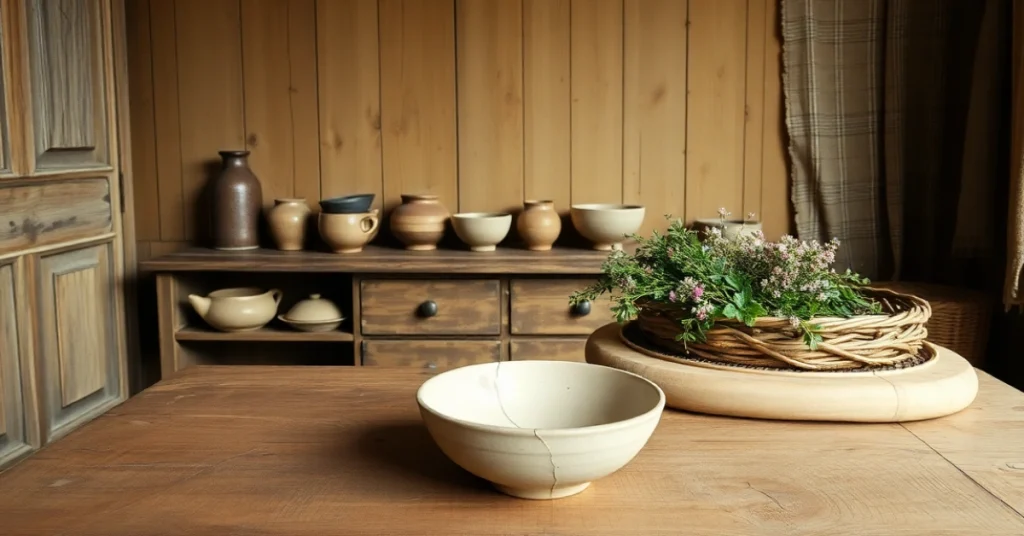
- Repair, Don’t Replace: If a ceramic bowl chips or a wooden table scratches, repair it with techniques like kintsugi (Japanese art of repairing with gold) to enhance its story.
In my own kitchen, I repaired a cracked ceramic mug with kintsugi, turning a flaw into a beautiful feature. It’s now a cherished piece that sparks conversation.
Wabi Sabi vs. Other Kitchen Design Styles
How does Wabi Sabi compare to other popular kitchen styles? Here’s a quick comparison:
| Style | Key Features | Wabi Sabi Differences |
|---|---|---|
| Modern | Sleek, high-tech, glossy finishes | Wabi Sabi uses raw, natural materials |
| Farmhouse | Rustic, cozy, white-heavy | Less polished, more focus on imperfection |
| Scandinavian | Minimalist, functional, bright | Warmer tones, more textured surfaces |
| Industrial | Raw materials, exposed elements | Softer, less urban, more organic |
Wabi Sabi stands out for its focus on imperfection and soulful simplicity, making it ideal for those seeking a unique, timeless kitchen.
Conclusion:
Wabi Sabi kitchen ideas offer a refreshing antidote to the sterile, mass-produced designs that dominate modern homes. By embracing natural materials, earthy colors, and the beauty of imperfection, you can create a kitchen that’s not only functional but also deeply personal and timeless. Whether you’re adding a reclaimed wood island, handcrafted ceramics, or textured zellige tiles, these ideas will help you craft a space that feels like home.


