
Coastal Farmhouse Kitchen: Timeless Design Idea
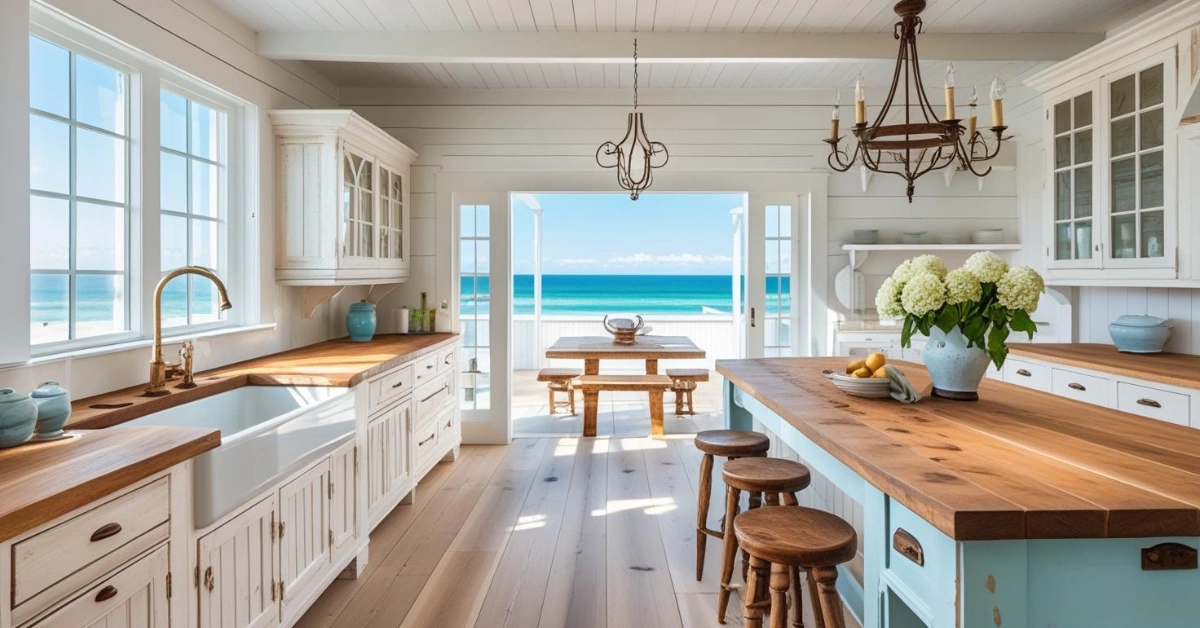
Designing a kitchen that feels both cozy and airy can be a challenge, especially when you’re drawn to the charm of a coastal farmhouse aesthetic but don’t know where to start. Many homeowners struggle to balance rustic warmth with the light, breezy vibes of coastal style without creating a cluttered or overly themed space. The solution lies in a thoughtful blend of natural materials, soft color palettes, and functional design elements that evoke the serene beauty of the coast and the timeless appeal of a farmhouse. In this guide, we’ll explore how to create a coastal farmhouse kitchen that’s inviting, practical, and stylish, with actionable ideas to inspire your next home project.
What Is a Coastal Farmhouse Kitchen?
A coastal farmhouse kitchen combines the rustic, lived-in charm of traditional farmhouse style with the light, airy essence of coastal design. Think weathered wood beams paired with crisp white cabinetry, or natural linen textiles alongside sea-inspired blues and greens. This aesthetic draws from the simplicity of rural life and the calming influence of the seaside, creating a space that feels both grounded and refreshing.
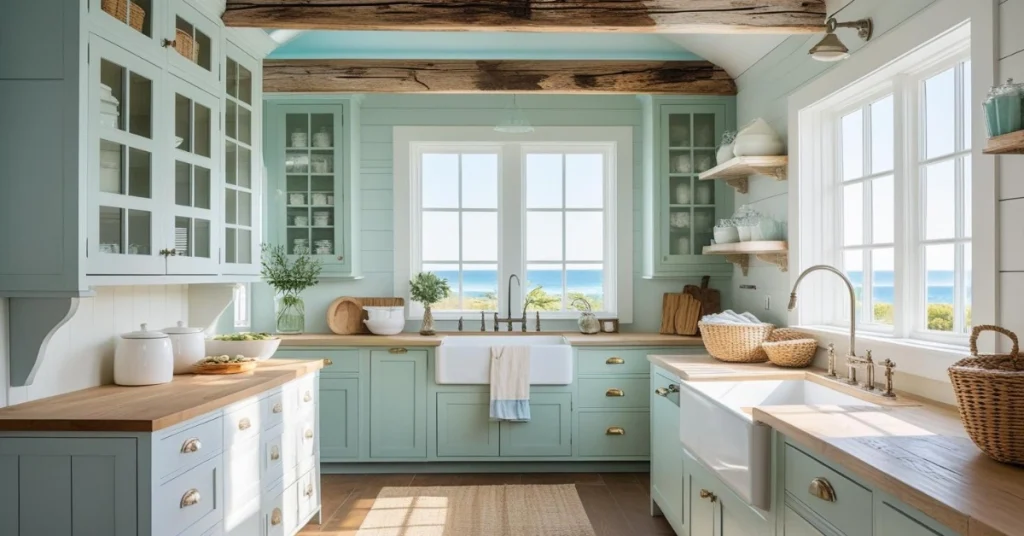
According to interior designer Sarah Johnson, “A coastal farmhouse kitchen is about balance—merging the sturdy, practical elements of a farmhouse with the soft, tranquil hues of the coast.” This style has gained popularity in recent years, with a 2023 Houzz report noting that 68% of homeowners renovating their kitchens prioritize open, airy layouts with natural textures, a hallmark of this design.
Key Characteristics of Coastal Farmhouse Style
- Neutral and Soft Color Palettes: Whites, creams, soft blues, and muted greens dominate, inspired by sandy beaches and ocean waves.
- Natural Materials: Wood, stone, and linen add texture and warmth.
- Functional Simplicity: Practical layouts with a focus on open shelving, large sinks, and durable surfaces.
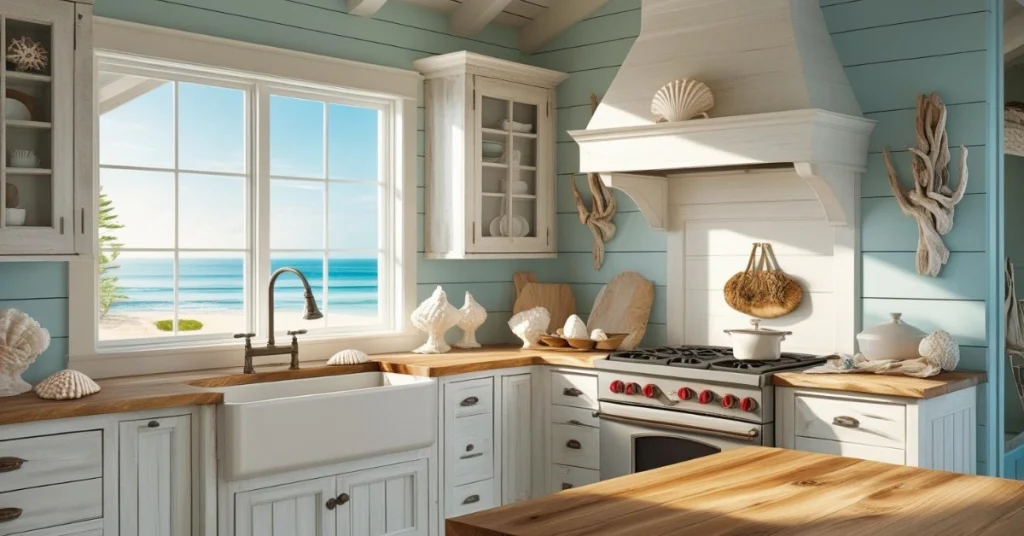
- Subtle Coastal Accents: Think driftwood, rope details, or glass elements, avoiding overly nautical themes.
Why Choose a Coastal Farmhouse Kitchen?
This style is ideal for homeowners who want a kitchen that feels welcoming, timeless, and versatile. It’s perfect for families who need a functional space for daily meals or those who love hosting gatherings in a warm, inviting environment. The coastal farmhouse aesthetic also adapts well to various home sizes, from cozy cottages to sprawling suburban homes. Its evergreen appeal ensures it won’t feel dated, even as design trends evolve.
Designing Your Coastal Farmhouse Kitchen: Key Elements
1. Color Palette: Setting the Tone
The foundation of a coastal farmhouse kitchen is its color scheme. Stick to soft, neutral tones like creamy whites, pale grays, and sandy beiges, accented with subtle coastal hues like seafoam green or dusty blue. These colors create a serene backdrop that feels both fresh and timeless.
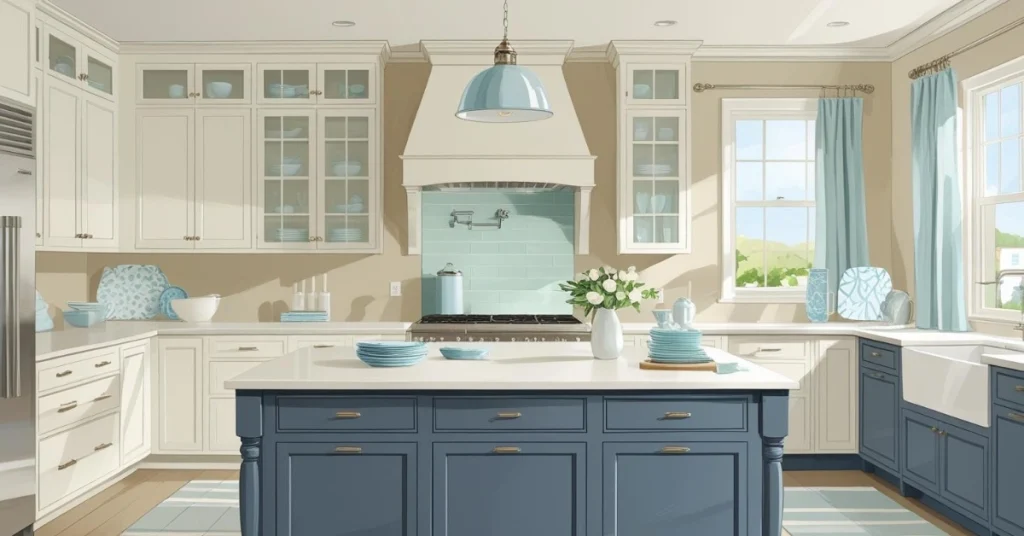
- Tip: Use white or off-white for cabinetry to reflect light and keep the space airy. Add pops of color through accessories like dishware or curtains.
- Example: In a recent project, a homeowner in Maine painted their lower cabinets a soft navy blue while keeping upper cabinets white, creating a striking yet balanced coastal vibe.
2. Cabinetry: Blending Form and Function
Cabinets are the backbone of any kitchen, and in a coastal farmhouse kitchen, they should feel sturdy yet refined. Opt for shaker-style cabinets, which offer clean lines and a timeless look. White or light gray cabinets are popular, but don’t shy away from natural wood finishes for a rustic touch.
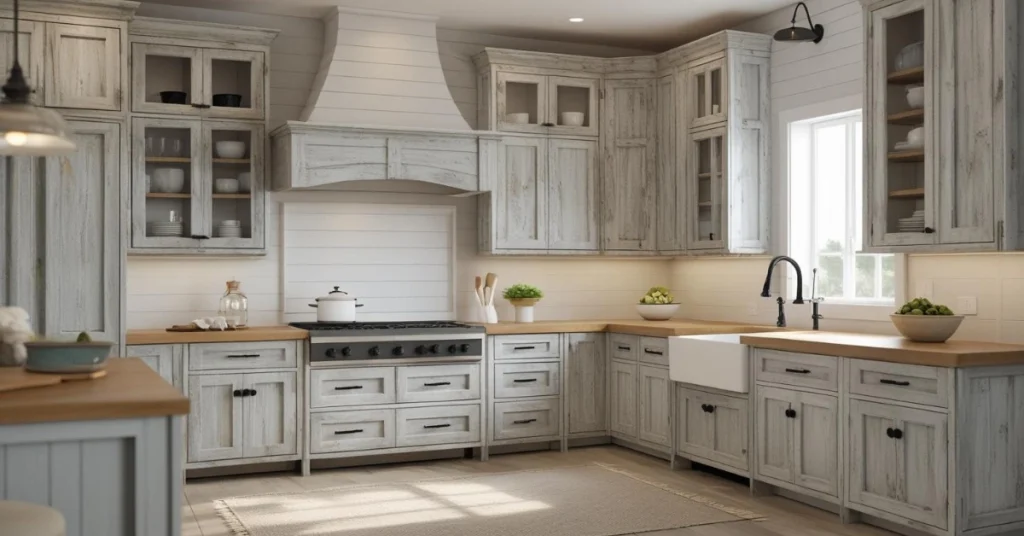
- Material Choices: Consider distressed or reclaimed wood for a weathered, coastal feel.
- Hardware: Use matte black or brass pulls for a subtle contrast.
- Designer Insight: “Shaker cabinets are a favorite because they’re versatile and pair well with both modern and rustic elements,” says interior designer Emily Carter.
3. Countertops and Backsplashes: Adding Texture
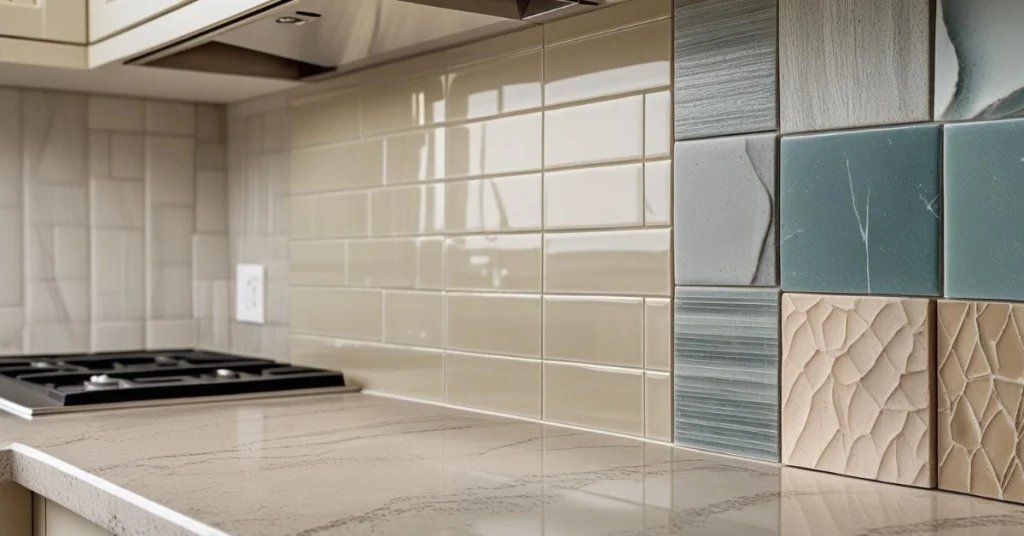
Countertops and backsplashes are opportunities to introduce texture and durability. Quartz or butcher block countertops are excellent choices for their practicality and aesthetic appeal. For backsplashes, subway tiles in white or soft gray are a classic option, while textured tiles like zellige or handmade ceramics add a coastal flair.
| Material | Pros | Cons |
|---|---|---|
| Quartz | Durable, low maintenance, versatile | Can be expensive |
| Butcher Block | Warm, rustic, affordable | Requires regular sealing |
| Zellige Tiles | Unique, artisanal look | Higher cost, delicate installation |
| Subway Tiles | Timeless, budget-friendly | Can feel generic if not styled well |
- Tip: Pair a butcher block countertop with a glossy subway tile backsplash for a balanced mix of rustic and refined.
4. Flooring: Grounding the Space
Flooring in a coastal farmhouse kitchen should feel natural and durable. Wide-plank hardwood in light or medium tones, such as oak or pine, adds warmth and character. For a more coastal touch, consider whitewashed wood or porcelain tiles that mimic natural stone.
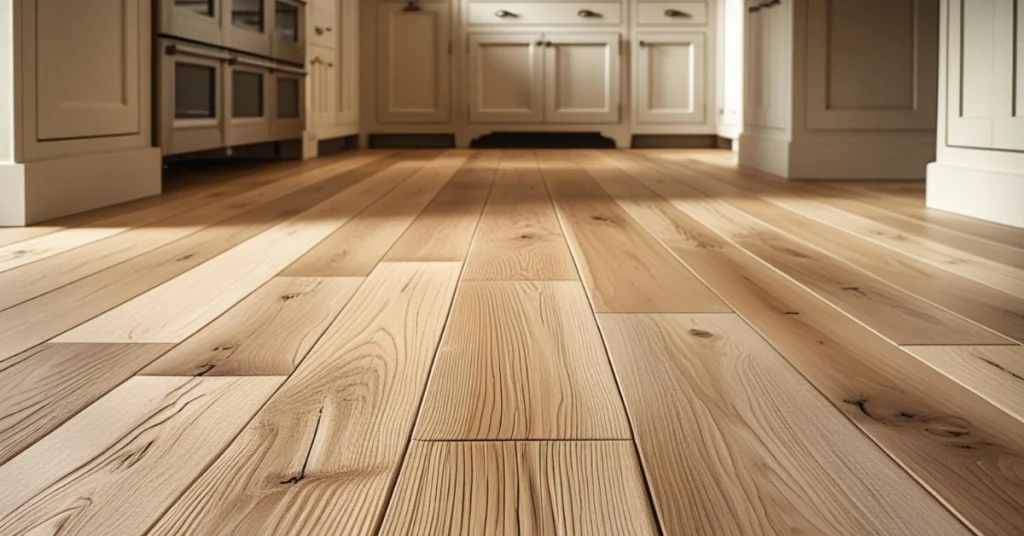
- Real-World Example: A homeowner in North Carolina used reclaimed barnwood flooring in their kitchen, giving it a rustic charm that complemented their shiplap walls.
- Maintenance Tip: Seal wood floors regularly to protect against spills and humidity, especially in coastal climates.
5. Lighting: Creating Ambiance
Lighting sets the mood in a coastal farmhouse kitchen. Pendant lights with woven or metal shades add a touch of rustic elegance, while glass or lantern-style fixtures evoke coastal charm. Consider installing a statement chandelier over a kitchen island for a focal point.
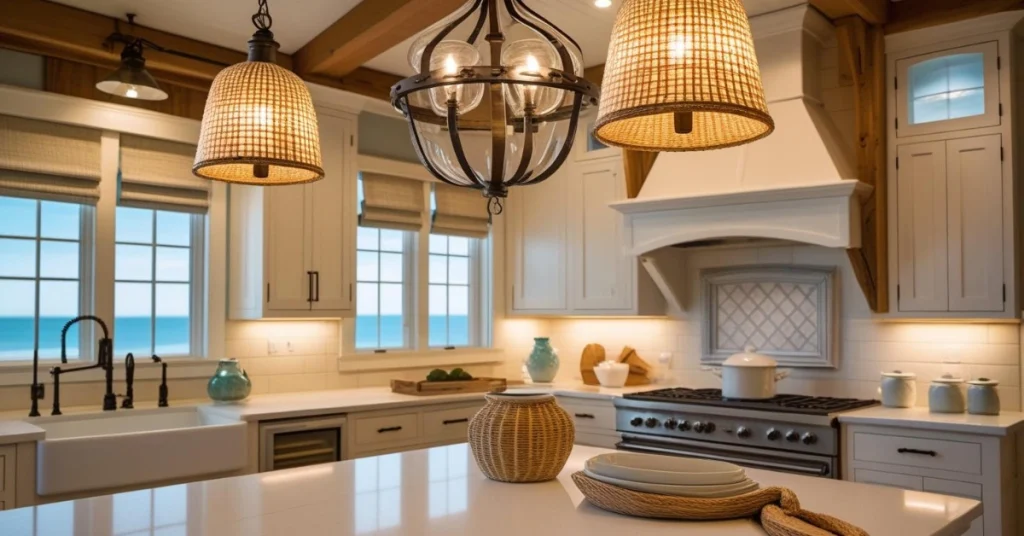
- Tip: Use dimmable lights to transition from bright task lighting during meal prep to soft, ambient lighting for evening gatherings.
- Designer Quote: “Lighting is like jewelry for your kitchen—it should enhance the space without overwhelming it,” says designer Laura Thompson.
6. Sinks and Fixtures: Practical Beauty
A farmhouse sink, also known as an apron-front sink, is a staple of this style. Its deep basin and exposed front add both functionality and charm. Pair it with a matte black or brushed nickel faucet for a modern twist.
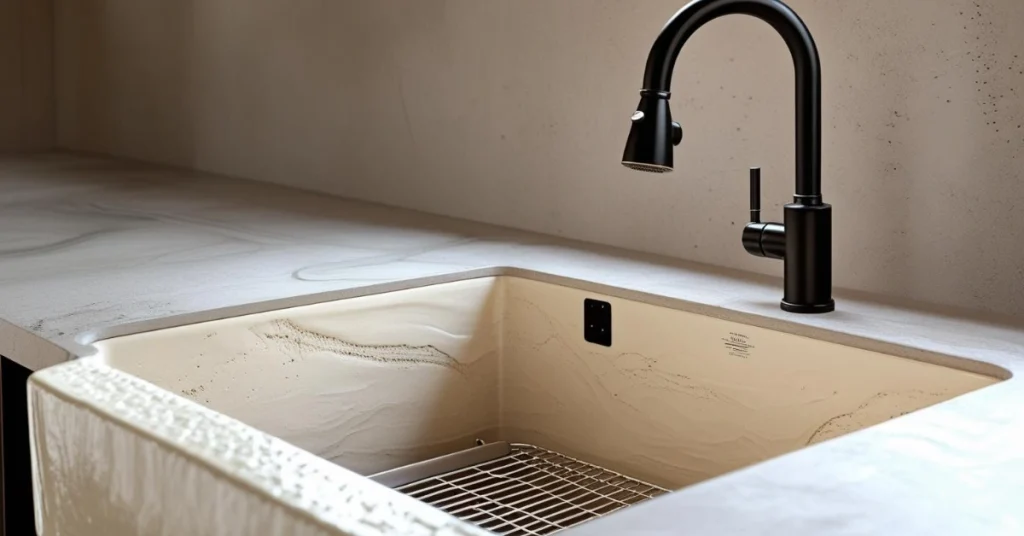
- Sink Options:
- Fireclay: Durable and resistant to stains, ideal for heavy use.
- Stainless Steel: Budget-friendly and easy to clean.
- Tip: Choose a sink with a grid or basket to protect the surface from scratches.
7. Open Shelving and Storage: Functional Charm
Open shelving is a hallmark of coastal farmhouse kitchens, offering both storage and display space. Use reclaimed wood shelves to showcase ceramic dishware, glass jars, or woven baskets. Balance open shelves with closed cabinets to keep the space organized.

- Styling Tip: Arrange items in odd numbers (e.g., three jars or five bowls) for a visually appealing display.
- Example: A California homeowner used driftwood shelves to display handmade pottery, tying the coastal theme into their kitchen.
8. Textiles and Accessories: Adding Personality
Textiles like linen curtains, cotton rugs, and woven placemats soften the space and add texture. Choose patterns like subtle stripes or checks in coastal colors like blue and white. Accessories such as rope-wrapped vases, seashell-inspired bowls, or wooden cutting boards enhance the aesthetic without feeling overly themed.

- Tip: Swap out textiles seasonally to keep the space fresh—think light linens in summer and cozy wool in winter.
Incorporating Modern Elements for Balance
While the coastal farmhouse kitchen leans on traditional elements, incorporating modern touches ensures it feels fresh and relevant. Stainless steel appliances, sleek bar stools, or minimalist light fixtures can add a contemporary edge without clashing with the rustic base.

- Example: A homeowner in Florida paired a vintage-inspired range with a modern quartz island, creating a seamless blend of old and new.
- Designer Tip: “Don’t be afraid to mix eras—modern appliances can ground the space and make it feel livable,” says designer Mark Evans.
Layout Ideas for Coastal Farmhouse Kitchens
The layout of your kitchen should prioritize functionality while enhancing the coastal farmhouse aesthetic. Here are three popular layouts:

- Open-Plan Kitchen:
- Ideal for: Families or frequent entertainers.
- Features: Large island, open shelving, and seamless flow into living or dining areas.
- Tip: Use a neutral-colored island to anchor the space without overwhelming it.
- Galley Kitchen:
- Ideal for: Smaller homes or apartments.
- Features: Efficient use of space with cabinets and appliances along two parallel walls.
- Tip: Add a small butcher block cart for extra prep space and mobility.
- L-Shaped Kitchen:
- Ideal for: Medium-sized homes with corner spaces.
- Features: Flexible layout with room for a small dining nook or island.
- Tip: Incorporate a window above the sink to maximize natural light and coastal vibes.
Budget-Friendly Coastal Farmhouse Kitchen Ideas
Creating a coastal farmhouse kitchen doesn’t have to break the bank. Here are some cost-effective tips:

- Paint Existing Cabinets: A fresh coat of white or light gray paint can transform dated cabinets.
- Shop Secondhand: Look for reclaimed wood or vintage fixtures at thrift stores or salvage yards.
- DIY Shiplap: Use affordable plywood cut into planks to mimic shiplap walls.
- Update Hardware: Swap out old cabinet pulls for brass or matte black ones for an instant refresh.
Common Mistakes to Avoid
- Overdoing the Nautical Theme: Avoid anchors, starfish, or overly literal coastal decor. Stick to subtle nods like rope accents or sea-glass colors.
- Cluttering Open Shelves: Keep shelves curated to avoid a messy look.
- Ignoring Functionality: Ensure your layout supports daily tasks like cooking and cleaning, not just aesthetics.
- Choosing Trendy Over Timeless: Opt for classic materials like wood and quartz over fleeting trends.

Inspiration from Real Coastal Farmhouse Kitchens
- Case Study 1: Coastal Cottage in Maine
A small coastal cottage used white shaker cabinets, a reclaimed wood island, and seafoam green accents to create a bright, inviting kitchen. The homeowner added woven bar stools and a jute rug for texture, keeping the space cozy yet open. - Case Study 2: Suburban Retreat in California
A larger suburban home embraced an open-plan layout with a oversized farmhouse sink, quartz countertops, and brass pendant lights. The soft gray walls and driftwood shelves brought in coastal charm without feeling overly themed.

FAQs About Coastal Farmhouse Kitchens
Q: How do I avoid making my kitchen look too “beachy”?
A: Focus on subtle coastal elements like light blues or natural textures, and balance them with rustic farmhouse features like wood beams or shaker cabinets.
Q: What’s the best way to incorporate color?
A: Use a neutral base (white, cream, or gray) and add color through accessories like curtains, rugs, or dishware for flexibility.
Q: Can this style work in a small kitchen?
A: Absolutely! Use light colors, open shelving, and a compact farmhouse sink to maximize space and maintain the aesthetic.
Conclusion:
A coastal farmhouse kitchen offers the perfect blend of rustic warmth and coastal serenity, making it an ideal choice for homeowners seeking a timeless, inviting space. By focusing on natural materials, soft colors, and functional design, you can create a kitchen that’s both beautiful and practical. Whether you’re starting from scratch or refreshing an existing space, these ideas and tips will guide you toward a kitchen that feels like home.


