
Log Home Kitchens: Design Ideas & Practical Tips

Log home kitchens often evoke a sense of warmth and nostalgia, but many homeowners struggle to balance their rustic charm with modern functionality. The unique aesthetic of log homes—characterized by exposed wood, natural textures, and cozy vibes—can make designing a kitchen that feels both timeless and practical a challenge. Whether you’re renovating an existing log home kitchen or building one from scratch, the right approach can transform this space into the heart of your home. This guide offers practical tips, creative ideas, and expert insights to help you design a log home kitchen that’s both beautiful and functional, blending the best of rustic tradition with contemporary needs.
From choosing materials that complement the log home aesthetic to optimizing layouts for small or large spaces, we’ll cover everything you need to create a kitchen that inspires. Let’s dive into the elements that make log home kitchens truly special.
Why Log Home Kitchens Are Unique
Log home kitchens stand out due to their natural, earthy aesthetic rooted in the architecture of log homes. The exposed logs, often hand-hewn or milled, create a warm, organic backdrop that sets the tone for the kitchen’s design. Unlike modern urban kitchens, which may prioritize sleek minimalism, log home kitchens lean into textures, warmth, and a connection to nature.

According to the Log Home Council, log homes have been a staple of American architecture since the 17th century, blending durability with a timeless aesthetic. This history influences kitchen design, where elements like wood, stone, and wrought iron are often used to maintain harmony with the home’s structure. Homeowners love log home kitchens for their cozy ambiance, but they also want modern conveniences like ample storage and efficient appliances. Balancing these desires is key to a successful design.
Key Characteristics of Log Home Kitchens
- Natural Materials: Wood, stone, and metal dominate to complement the log walls.
- Warm Lighting: Soft, ambient lighting enhances the cozy feel.
- Open Layouts: Many log home kitchens connect seamlessly with living areas, reflecting the open-concept trend.
- Rustic Accents: Elements like exposed beams or reclaimed wood add character.
Choosing the Right Layout for Your Log Home Kitchen
The layout of your log home kitchen is critical to its functionality and aesthetic appeal. The best layout depends on the size of your space, your lifestyle, and how you use the kitchen. Here are some popular layouts tailored for log home kitchens:
1. The Galley Kitchen
Ideal for smaller log homes, a galley kitchen features two parallel counters, maximizing efficiency in a compact space. This layout works well if you want a streamlined cooking area that doesn’t overpower the rustic charm of your home.

- Pros: Space-saving, easy to navigate, cost-effective.
- Cons: Limited counter space, less ideal for entertaining.
- Tip: Use open shelving to keep the space airy and avoid heavy cabinetry that can make the kitchen feel cramped.
2. The L-Shaped Kitchen
An L-shaped layout is versatile, offering ample counter space and room for a small dining area or island. It’s perfect for log homes with medium-sized kitchens.

- Pros: Flexible, allows for a natural workflow, great for open-plan homes.
- Cons: Corner storage can be tricky without pull-out organizers.
- Tip: Incorporate a corner sink to make use of the angle and add a rustic farmhouse touch.
3. The Island-Centric Kitchen
For larger log homes, an island-centric layout adds both functionality and a social hub. The island can serve as a prep area, casual dining spot, or gathering place.

- Pros: Increases storage, enhances social interaction, adds counter space.
- Cons: Requires a larger footprint, can disrupt open sightlines if poorly placed.
- Tip: Choose a wooden or stone-topped island to echo the log home’s natural aesthetic.
Interior designer Sarah Thompson, who specializes in rustic homes, suggests, “In log home kitchens, the layout should feel intuitive. An island can anchor the space, but make sure it doesn’t block the flow between the kitchen and living areas.” Consider your daily routine—do you need space for baking, entertaining, or quick meals?—and choose a layout that supports those needs.
Material Choices for Log Home Kitchens
Materials play a huge role in defining the look and feel of log home kitchens. The goal is to select materials that complement the log walls while adding durability and style. Here are some top choices:
Wood
Wood is the backbone of log home kitchens, but it’s important to strike a balance so the space doesn’t feel overly heavy. Opt for lighter wood tones, like pine or maple, for cabinets or flooring to contrast with darker log walls.

- Best Uses: Cabinets, flooring, open shelving.
- Tip: Seal wood surfaces to protect against moisture and wear, especially in high-traffic kitchens.
Stone
Stone countertops, like granite or soapstone, add a rugged yet elegant touch. A stone backsplash or accent wall can also tie the kitchen to the natural surroundings.

- Best Uses: Countertops, backsplashes, accent walls.
- Tip: Choose a matte or honed finish for a more rustic look, avoiding overly polished surfaces.
Metal
Wrought iron or copper accents, such as cabinet hardware or light fixtures, add a touch of craftsmanship. These materials pair beautifully with wood and stone.

- Best Uses: Hardware, lighting, sink fixtures.
- Tip: Consider aged or distressed metal for a vintage, lived-in feel.
Example: A Real-World Log Home Kitchen
In a recent project in Montana, homeowners opted for reclaimed barnwood cabinets paired with a soapstone countertop. The combination created a warm, inviting kitchen that felt authentic to the log home’s aesthetic while offering modern durability. “The reclaimed wood told a story,” the homeowner noted, “and it made the kitchen feel like it had always been part of the house.”
Color Schemes for Log Home Kitchens
Color choices in log home kitchens should enhance the natural warmth of the wood while creating a welcoming atmosphere. Here are some ideas to inspire your palette:
- Earthy Neutrals: Shades like taupe, beige, and soft gray complement log walls without overwhelming them.
- Bold Accents: Deep greens, navy blues, or terracotta can add personality in small doses, like on an island or backsplash.
- Classic Whites: A white or cream kitchen can brighten a space, especially if your log home has limited natural light.

Tips for Choosing Colors
- Test paint samples against your log walls to see how they interact with the wood’s tone.
- Use lighter colors in smaller kitchens to create a sense of space.
- Incorporate color through accessories, like rugs or curtains, for flexibility.
Designer Emily Carter advises, “Don’t shy away from color in log home kitchens, but use it sparingly. A pop of color on an island or backsplash can make the space feel modern without losing its rustic soul.”
Lighting Ideas for Log Home Kitchens
Lighting is crucial in log home kitchens, where natural wood can sometimes make spaces feel darker. The right lighting enhances both functionality and ambiance. Here are some ideas:
1. Pendant Lights
Hanging pendant lights over an island or dining area add a focal point. Choose fixtures with natural materials, like wrought iron or wood, to match the rustic aesthetic.
- Example: Lantern-style pendants with Edison bulbs for a vintage vibe.

2. Under-Cabinet Lighting
Under-cabinet lights illuminate countertops for food prep while adding a soft glow to the space.
- Tip: Opt for LED strips for energy efficiency and a clean look.
3. Chandeliers
A rustic chandelier, made of antlers or forged iron, can make a bold statement in larger log home kitchens.
- Tip: Ensure the chandelier’s scale matches the room—too large, and it overwhelms; too small, and it gets lost.
Lighting Dos and Don’ts
- Do: Layer lighting (ambient, task, and accent) for versatility.
- Don’t: Rely solely on overhead lighting, as it can create harsh shadows.
- Do: Use dimmers to adjust the mood for cooking or entertaining.
Storage Solutions for Log Home Kitchens
Storage is a common concern in log home kitchens, especially in smaller spaces. Smart storage solutions can maximize space while maintaining the rustic aesthetic.
Open Shelving
Open shelves made of reclaimed wood or metal brackets showcase dishes or decor while keeping the kitchen airy.
- Pros: Easy access, visually appealing, cost-effective.
- Cons: Requires regular dusting, less suitable for cluttered items.

Pull-Out Cabinets
Pull-out drawers or corner organizers make use of awkward spaces, ensuring no storage potential is wasted.
- Tip: Install soft-close mechanisms for a touch of luxury.
Pantry Ideas
A walk-in pantry or a built-in cabinet pantry can keep dry goods and appliances out of sight, maintaining a clean look.
- Example: In a Colorado log home, a custom pantry with sliding barn doors added both storage and rustic charm.
Appliances for Log Home Kitchens
Modern appliances can coexist with the rustic charm of log home kitchens if chosen thoughtfully. Stainless steel or matte black finishes blend well with natural materials, while retro-style appliances can add a playful nod to vintage design.

Top Appliance Picks
- Refrigerators: Look for counter-depth models to save space and maintain a streamlined look.
- Ranges: A gas range with a rustic finish, like matte black or copper, adds character.
- Dishwashers: Choose quiet models with wood-panel options to blend with cabinetry.
Expert Tip
“Invest in energy-efficient appliances,” says kitchen designer Mark Reynolds. “They’re not only eco-friendly but also practical for remote log homes where power supply might be limited.”
Decor and Accessories for Log Home Kitchens
Decor is where you can let your personality shine in a log home kitchen. The key is to choose pieces that enhance the rustic aesthetic without cluttering the space.

Ideas for Decor
- Textiles: Linen or burlap curtains, woven rugs, or plaid table runners add warmth.
- Wall Art: Framed botanical prints or vintage kitchen tools create a cozy vibe.
- Plants: Potted herbs or small succulents bring life to the space.
Avoiding Over-Decoration
Keep decor minimal to avoid overwhelming the natural beauty of the log walls. A few well-chosen pieces, like a ceramic pitcher or a wooden cutting board, can make a big impact.
Small Log Home Kitchen Ideas
Small log home kitchens require creative solutions to maximize space while maintaining charm. Here are some tips:

- Use Vertical Space: Install tall cabinets or shelves to store items without taking up floor space.
- Choose Multi-Functional Furniture: A foldable table or a rolling island can serve multiple purposes.
- Opt for Light Colors: White or light gray cabinets can make a small kitchen feel larger.
Example: A Compact Retreat
In a small log cabin in Vermont, homeowners transformed their tiny kitchen by installing a butcher-block island that doubled as a dining table. The addition of open shelves and a light color palette made the space feel open and inviting.
Large Log Home Kitchen Inspiration
Larger log home kitchens offer more room for creativity but require careful planning to avoid feeling cold or empty. Here are some ideas:

- Create Zones: Designate areas for cooking, dining, and socializing to make the space feel purposeful.
- Incorporate a Fireplace: A stone fireplace or hearth can add warmth and serve as a focal point.
- Add a Large Island: A spacious island with seating can anchor the room and encourage gatherings.
Example: A Mountain Lodge Kitchen
In a Wyoming log home, a massive kitchen island with a granite top became the centerpiece of the space. Paired with exposed beams and a stone backsplash, the kitchen felt grand yet cozy, perfect for hosting large family gatherings.
Blending Modern and Rustic Elements
One of the biggest trends in log home kitchens is blending rustic charm with modern conveniences. This approach creates a space that feels timeless yet functional.

- Modern Touches: Sleek appliances, minimalist hardware, or a glass backsplash add contemporary flair.
- Rustic Balance: Reclaimed wood, stone, or handcrafted details keep the space grounded in its log home roots.
Designer Laura Bennett shares, “The beauty of log home kitchens is their versatility. You can add a touch of modern elegance with clean lines or go all-in on rustic with hand-hewn wood accents. The key is balance.”
Maintaining Your Log Home Kitchen
Log home kitchens require regular maintenance to keep wood, stone, and other materials looking their best. Here are some tips:

- Wood Care: Seal wood surfaces every 1–2 years to protect against moisture and stains.
- Stone Maintenance: Use a stone-specific cleaner to avoid damaging countertops or backsplashes.
- Appliance Upkeep: Clean appliances regularly to maintain their appearance and performance.
Maintenance Schedule
| Task | Frequency | Notes |
|---|---|---|
| Seal wood surfaces | Every 1–2 years | Use food-safe sealants for counters |
| Clean stone surfaces | Monthly | Avoid acidic cleaners |
| Dust open shelves | Weekly | Prevents buildup in rustic kitchens |
Common Mistakes to Avoid in Log Home Kitchen Design
Even the best intentions can lead to design missteps. Here are some common pitfalls and how to avoid them:
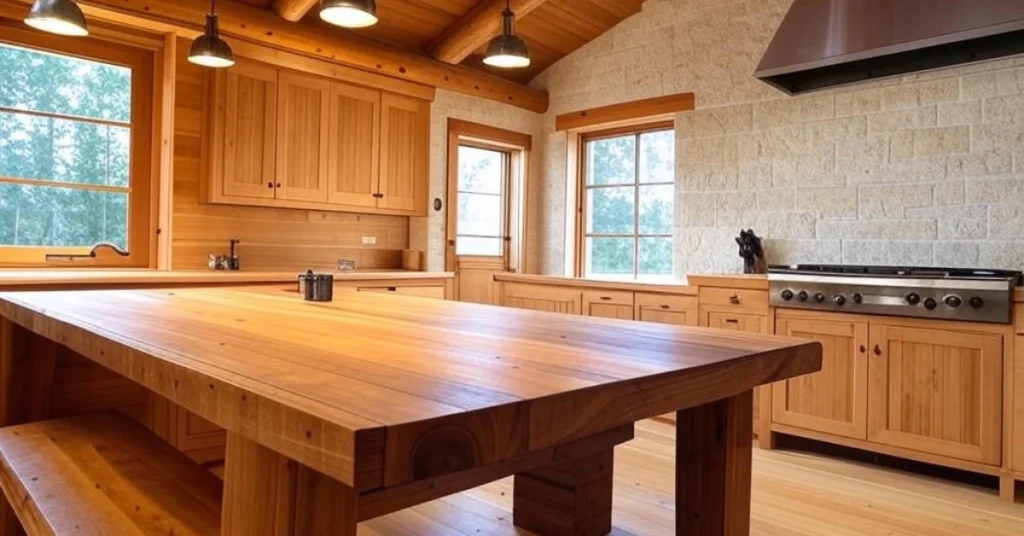
- Overloading with Wood: Too much wood can make the kitchen feel heavy. Balance it with lighter materials like stone or metal.
- Ignoring Lighting: Poor lighting can make a log home kitchen feel dark and uninviting. Layer lighting for the best effect.
- Neglecting Storage: Failing to plan for adequate storage can lead to a cluttered space. Prioritize smart storage solutions.
Conclusion:
Designing a log home kitchen is an opportunity to blend rustic charm with modern functionality, creating a space that’s both beautiful and practical. By carefully choosing layouts, materials, colors, and decor, you can craft a kitchen that reflects your style while meeting your everyday needs. Whether you’re working with a small cabin or a sprawling lodge, the ideas and tips in this guide can help you create a log home kitchen that’s warm, inviting, and timeless.


